

"Got My Mojo Working" is one of the most celebrated and controversial recordings in the history of the blues. Released by Muddy Waters in 1957, it became his signature song, a standard in virtually every blues band's repertoire, and one of the most influential recordings in the transition from blues to rock and roll. Yet behind its seemingly simple narrative of hoodoo magic and romantic frustration lies a tangled story of disputed authorship, legal battles, and artistic transformation that illuminates the complex relationship between blues tradition, commercial recording, and intellectual property.
The Song's Origins: A Tangled Web
Preston "Red" Foster and Ann Cole
The song was written by Preston "Red" Foster, an African-American musician described by music publisher Sol Rabinowitz as "one of the shyest human beings I've ever met." In the mid-1950s, Foster approached Rabinowitz with several songs, including "Mojo." Rabinowitz planned a session with R&B singer Ann Cole and felt the song was perfect for her. She learned it in an hour, and they recorded it in 1956.
Cole was then booked as the opening act for Muddy Waters' Southern tour, with Waters's band backing her. Rabinowitz had asked her not to perform unreleased songs on stage, but she ignored him and sang "Mojo" at clubs throughout the South. Waters heard the song, liked it, and returned to Chicago determined to record it.
Muddy Waters's Adaptation
Waters recorded "Got My Mojo Working" on December 1, 1956, at Chess Records in Chicago. He used many of Foster's lyrics but added significant elements of his own. He incorporated a reference to acquiring a mojo from his 1950 song "Louisiana Blues" ("I'm goin' down in New Orleans, get me a mojo hand") and added the "gypsy woman" verse. He also created a completely different musical arrangement — while Cole's version reflected a doo-wop style, Waters's emphasized a driving jump blues rhythm that became the template for rock and roll.
Waters initially claimed authorship of the song, telling Leonard Chess he had written a new song he wanted to record. Chess released Waters's version the same week as Cole's original. When Rabinowitz called Chess to inform him that he had recorded a song published by his company, Chess signed a mechanical license agreeing to pay royalties. But the legal battles were far from over.
The Legal Battles
The authorship dispute became extraordinarily complex. Ruth Stratchborneo also claimed copyright on a similar song called "Mojo Workout," and all three songs started with the same verse. Even Bill Cosby became involved, recording his own "mojo" song in 1966 after licensing copyright from Stratchborneo. Eventually, Preston Foster won the copyright, and Rabinowitz regularly sent him checks for $20,000–30,000 a year in royalties by the 2000s. Foster later set up GetIt Records in Jamaica, New York, and released singles under his name and as "The Mojo Kid."
The Recording Session
Date and Location
December 1, 1956 — Chess Studios, Chicago, Illinois. This was a productive period for Waters, who was recording some of his most important material for Chess.
The Producers
Leonard Chess and Phil Chess — the Polish-Jewish immigrant brothers who founded Chess Records — served as the session's producers. Their approach was typically hands-off creatively but commercially shrewd: they trusted their artists and session musicians to deliver the goods, while ensuring the recordings had the commercial punch to compete in the R&B market.
The Musicians
The personnel on the December 1, 1956 session included:
-
Muddy Waters — vocals
-
Little Walter or James Cotton — harmonica (sources differ; both have been mentioned as supplying the harmonica parts)
-
Jimmy Rogers — guitar
-
Otis Spann — piano
-
Willie Dixon — bass
-
Fred Below — drums
This was essentially the classic Muddy Waters band of the mid-1950s — the ensemble that had defined the Chicago blues sound and would soon influence the British blues revolution. The harmonica player is disputed: some sources credit Little Walter, Waters's regular harp man at the time, while others suggest James Cotton, who would later become Waters's full-time harmonica player. The driving rhythm section of Dixon and Below provided the propulsive foundation that made the song so danceable.
Release and Chart Performance
"Got My Mojo Working" was released as a single on Chess Records in March 1957 (Chess 1652), with "Rock Me" as the B-side. While the single did not achieve the same chart success as some of Waters's earlier hits, it became a staple of his live performances and eventually one of his most celebrated recordings. The studio version was relatively concise, but Waters would stretch it to epic lengths in concert, with the call-and-response "got my mojo working" refrain becoming a ritualistic chant that could extend the song to 10 minutes or more.
The Live Version: At Newport 1960
The most famous version of "Got My Mojo Working" is the live recording from the Newport Jazz Festival on July 3, 1960, captured on the album Muddy Waters at Newport 1960. This performance, as blues historian Jim O'Neal noted, "secured the song's renown" and became "a standard in countless blues band repertoires."
The Newport version features:
-
Muddy Waters — vocals
-
Pat Hare — guitar
-
James Cotton — harmonica
-
Otis Spann — piano
-
Andrew Stephens — bass
-
Francis Clay — drums
The performance is a masterclass in building tension and release. Waters stretches the song to over seven minutes, with the band locked into a hypnotic groove and the audience responding to Waters's call-and-response exhortations. The recording captures the energy of a blues performance at its peak — communal, ecstatic, and transformative.
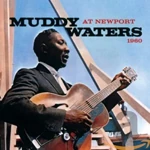 Muddy Waters At Newport 1960 Buy from Amazon
Musical Style and Significance
AllMusic critic Matthew Greenwald identified the song's importance: "A sturdy jump blues rhythm and tempo drive the song, while a basic 1/4/5 chord progression defines the melody. The meeting of these two styles is the basis for the rock & roll genre and makes the song one of the most influential."
Waters himself explained the song's cultural significance: "When you're writin' them songs that are coming from down that way [Mississippi Delta], you can't leave out somethin' about that mojo thing. Because this is what black people really believed in at that time... even today [circa 1980], when you play the old blues like me, you can't get from around that." The mojo — a talisman of African American folk magic — was not merely a metaphor but a real cultural practice that Waters drew upon for authentic expression.
Cover Versions and Legacy
Elvis Presley
Elvis Presley combined "Got My Mojo Working" with Jay McShann's "Hands Off" during a 1970 studio jam session. The medley was released on the 1971 album Love Letters from Elvis. Music historian Larry Birnbaum identified "Hands Off" (1955) as the "obvious basis" for "Got My Mojo Working," suggesting a direct lineage from Kansas City jump blues to Chicago blues to rock and roll.
The Rolling Stones
The Rolling Stones covered "Got My Mojo Working" in their early repertoire, absorbing the song's driving rhythm and Waters's vocal approach into their own blues-rock sound. Mick Jagger's drawled, slurred delivery owed a significant debt to Waters's example.
Jimi Hendrix
Jimi Hendrix was deeply influenced by Waters's music and incorporated "Got My Mojo Working" into his live performances. Hendrix's raw, electrified approach to the blues was built on the foundation that Waters and his Chess contemporaries had laid.
Bruce Springsteen
The Bruce Springsteen Band covered "Got My Mojo Working" at the University of Richmond on October 23, 1971. Springsteen drew from multiple sources — Foster's original, Waters's version, and possibly other adaptations — creating his own interpretation that referenced "black cat bones" (from Foster's original) while maintaining the Waters energy.
Bill Cosby
In a bizarre footnote, Bill Cosby recorded his own "mojo" song in 1966 after licensing copyright from Ruth Stratchborneo. The song contained the now-disturbing lyrics: "I got my mojo working, and I'm gonna try it on you... Well I tried it out in Philly, you should have seen the women go. When you see me, baby, you gonna fall right out the chair! You're a victim of the mojo!"
Other Covers
The song has been recorded by hundreds of artists across blues, rock, jazz, and pop genres. It is a standard in virtually every blues band's repertoire and has been performed by artists as diverse as Otis Rush, Johnny Rivers, C.C. Rider, and countless others.
Honors and Recognition
"Got My Mojo Working" has received extraordinary recognition:
-
1984: Inducted into the Blues Foundation Hall of Fame as a "Classic of Blues Recording"
-
1999: Grammy Hall of Fame Award
-
2004: Rolling Stone's 500 Greatest Songs of All Time — ranked No. 202
-
RIAA: Identified as one of the "Songs of the Century"
Conclusion
"Got My Mojo Working" is more than a blues song — it is a document of cultural transmission, commercial transformation, and artistic adaptation. From Preston Foster's original composition through Ann Cole's doo-wop recording, Muddy Waters's jump blues reinvention, and the countless covers that followed, the song demonstrates how blues tradition evolves through performance, recording, and reinterpretation.
The legal battles over authorship — Foster vs. Waters, Stratchborneo vs. both — illustrate the tensions between folk tradition and commercial copyright that have defined American music since the beginning of recorded sound. Yet the song's enduring power transcends these disputes. Whether performed by Muddy Waters at Newport in 1960, by the Rolling Stones in a London club, or by a bar band in any city in the world tonight, "Got My Mojo Working" remains what Jim O'Neal called it: "a standard in countless blues band repertoires" — a mojo that truly works, on every audience, in every era.









