Miracle Records was one of the most significant independent record labels to emerge from Chicago's vibrant postwar music scene. Founded in 1946 by a young entrepreneur with a vision for rhythm and blues, jazz, and gospel, the label achieved remarkable commercial success in its brief four-year existence, producing three No. 1 R&B hits before financial pressures and the departure of its founder led to its closure in 1950. Its legacy lives on through the careers it launched, the masters it produced, and the artists who passed through its doors.
Founding and Ownership
Miracle Records was officially launched in August 1946 by Lee L. Egalnick (1921–2000), a Chicago-born businessman who was just 25 years old at the time.
Egalnick's partner from the beginning was Lewis Conrad "Lew" Simpkins (1918–?), a Mississippi-born entrepreneur who had established himself in Chicago's Bronzeville neighborhood as the proprietor of S & S Bookstore at 107 East 47th Street.
The relationship between Egalnick and Simpkins was complementary. Simpkins had developed deep connections within Chicago's Black entertainment community through his bookstore, which by 1944 was not only selling books "by and about Negroes" and current bestsellers, but also the "latest records" and featuring a "new and modern recording studio" used primarily for auditions and demos. Egalnick, described by Billboard in November 1946 as a "former race record distribber," brought business experience and presumably some capital to the venture.
The company's original address was 107 East 47th Street—the same location as Simpkins' bookstore and recording studio. By February 1947, the company had moved to 500 East 63rd Street, in the heart of a growing nightclub district, suggesting Simpkins had closed the bookstore to focus on the label full-time.
Recording Infrastructure
The principal recording venue for Miracle was United Broadcasting Studio, owned by Egmont Sonderling (1906–?), a German immigrant who had opened the studio in 1939. Sonderling had moved his operation to 64 East Lake in 1945 and opened a pressing plant, advertising in January 1946 his readiness to press 2 million platters. By 1947, he was calling his operation Master Records. Some early Miracle recordings were also made at Myron Bachman's Studio on Carmen Avenue.
This relationship with Sonderling would prove consequential. When Miracle began experiencing financial difficulties, some of its masters ended up being released on Sonderling's subsidiary labels, Old Swing-Master and Master, likely in compensation for unpaid studio and pressing bills.
Distribution and Business Operations
Miracle initially distributed through J. Mayo Williams' Ebony operation at 307 Lenox Avenue in New York. By late 1947, they had switched to Major Distributing, a New York firm that carried a wide range of independent labels. The company also experimented with Central Record Sales, a distribution cooperative, but this did not move the quantities of product Miracle needed.
The label's marketing included a somewhat ill-fated slogan: "If it's a hit, it's a Miracle!" While this was reportedly coined as a joke by Motown PR chief Al Abrams (who later worked with a different Miracle Records), it captured the spirit of the independent record business—where every hit truly did feel miraculous.
The Artists and Recordings
Miracle Records released music by a remarkable roster of artists who would go on to significant careers in blues, jazz, and R&B.
Memphis Slim (John Len Chatman)
One of Miracle's most important artists was Memphis Slim (1915–1988), the great blues pianist and singer. His 1948 recording of "Messin' Around" reached No. 1 on the Billboard R&B chart (then called the "Race Records" chart).
Memphis Slim recorded extensively for Miracle, and his masters would eventually be sold to King Records when Miracle closed. Some of his unreleased material even ended up on Sonderling's Old Swing-Master and Master labels.
Sonny Thompson
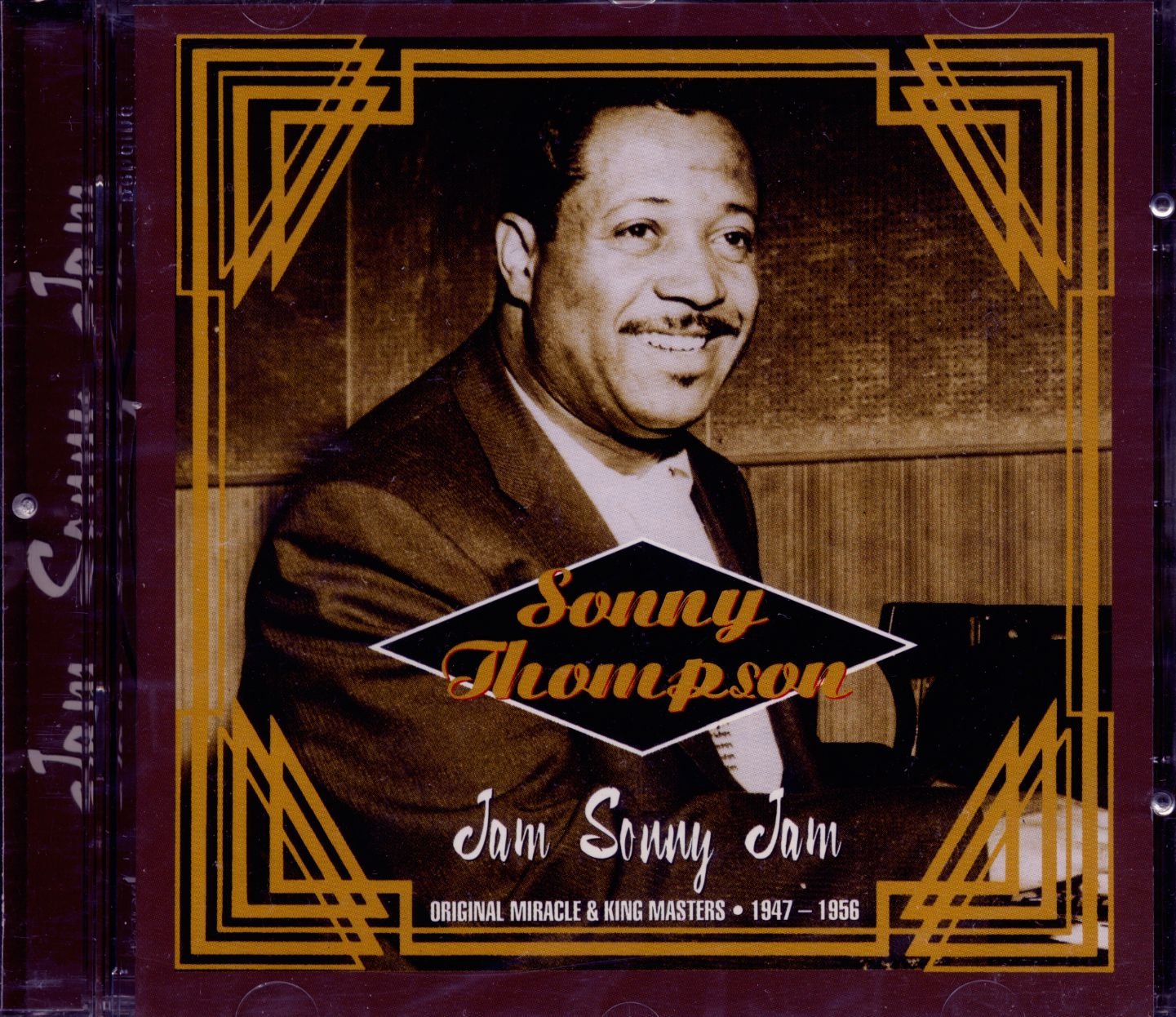
Sonny Thompson (Alphonso Thompson, 1916–1989) was perhaps Miracle's biggest commercial success. A Memphis-born pianist who had moved to Chicago as a child and studied at the Chicago Conservatory of Music, Thompson had previously recorded for the Detroit-based Sultan label. His 1948 two-part release "Long Gone" (Miracle 126) sold approximately 200,000 copies, reached No. 1 on the R&B charts, and stayed there for more than 30 weeks. It even briefly crossed over to the pop charts, hitting #29. The record was so popular that Egalnick had to fight bootleggers in St. Louis who were selling counterfeit copies.
Thompson followed this with "Late Freight," another No. 1 R&B hit. Both records featured crucial saxophone work by Eddie Chamblee, whose contributions were so significant that in January 1949, he formed his own combo and began a lengthy engagement at the Blue Heaven Lounge, billing himself as "Eddie (Long Gone) Chamblee."
After Miracle folded, Thompson recorded extensively for King Records and later handled A&R for the label until 1964. He died on August 11, 1989.
Eddie Chamblee
Eddie Chamblee (1920–1999) was a tenor saxophonist whose work on Thompson's hits made him a star in his own right. In addition to his famous solos on "Long Gone" and "Late Freight," Chamblee recorded as a leader for Miracle. After the label's success with Thompson, Chamblee formed his own combo with Jimmy Craig (piano), Eugene Wright (bass), and Chuck Williams (drums).
Rudy Richardson
Rudy Richardson was a Chicago-based vocalist who recorded for Miracle in 1946. He was backed by Dick Davis's combo, which included Sonny Thompson on piano, Eddie Calhoun on bass, and Jimmie Hoskins on drums. Richardson's story took a tragic turn: after leaving Miracle, he recorded for Sun Records in 1957 (produced by Sam Phillips), but on June 1, 1958, his body was found in a Nashville rooming house; he had drunk denatured alcohol, very possibly with suicide in mind.
Gladys Palmer and Floyd Hunt
Gladys Palmer and Floyd Hunt recorded together for Miracle, and their single Miracle 104 became one of the label's early successes, selling well enough by August 1947 to warrant trade advertisements. This was a crucial release that helped establish the label's credibility in the marketplace.
Dick Davis
Dick Davis was a bandleader whose combo served as the backing band for several Miracle artists, including Rudy Richardson. His combo at the Tradesmen's Lounge featured the rhythm section of Sonny Thompson, Eddie Calhoun, and Jimmie Hoskins. Davis himself recorded as a leader for Miracle, though the company would not record him again as a leader after his initial sessions. He later recorded for Gotham Records in 1949.
Piney Brown
Piney Brown was a blues and R&B singer who recorded for Miracle, contributing to the label's deep blues roster.
Al Hibbler and the Sunrise Connection
A fascinating chapter in Miracle's history involves Sunrise Records, a label founded in April 1947 by Leonard Evans in New York City. Sunrise recorded jazz and vocal material, including numerous sides by Al Hibbler, the former Duke Ellington vocalist, with accompaniment led by Billy Strayhorn and featuring Ellington band members such as Ray Nance, Jimmy Hamilton, Al Sears, Harry Carney, and others.
In March 1948, Miracle entered a joint venture to distribute and market Sunrise, with Miracle handling the "race platters" while eliminating the "hot jazz masters." This arrangement produced a major hit in December 1948 with Al Hibbler's "Trees," which became a national success. However, the partnership was troubled from the start. Leonard Evans was never happy with the arrangement, and on April 30, 1949, Billboard reported that Miracle had split with Sunrise, with Evans returning as president. The old Sunrise masters in Miracle's possession were returned to Evans.
Other Artists
Miracle's roster also included Tommy Dean, Robert Anderson, and gospel groups like the Dixieaires. The label's output encompassed blues, jazz, R&B, and gospel, reflecting the rich musical ecosystem of postwar Chicago.
The Decline and Closure
By 1949, Miracle's fortunes were declining. The hits had stopped coming. The company had distribution troubles, with the New York branch of Central Record Sales closing and being replaced by Portem. In Chicago, American Record Distributors took over lines that had previously been handled by Central Sales.
The company could not afford further sessions. Egalnick and Simpkins milked Memphis Slim's remaining inventory for as long as they could, but by February 1950, Cash Box was listing King 4312 by Memphis Slim "as though it was a Miracle release"—a sign of how far the label had fallen.
In May 1950, Lee Egalnick left Miracle to found Premium Records. Lew Simpkins followed him the next month, closing Miracle down. Premium lasted a little over a year and recorded some former Miracle artists as well as new talent.
The Fate of the Masters
When Miracle closed, its masters were not lost to history. On November 4, 1950, Billboard reported that King Records had purchased 165 Miracle masters and roughly 50,000 Miracle platters from the Internal Revenue Service for $4,700—presumably the IRS was collecting on unpaid taxes. The masters included material by Memphis Slim, Eddie Chamblee, Tommy Dean, Gladys Palmer, and Sonny Thompson. King acquired everything that Miracle still had, excluding material that had already been turned over to Egmont Sonderling.
King reissued "Long Gone" on its flagship label (King 4438) in 1951, and also released it on 45 RPM. Other Miracle material was allocated to King's Federal subsidiary, which was being launched as the acquisition took place. Miracle-derived sides appeared on Federal in the 12000 R&B series, including releases on Federal 12004, 12005, 12006, 12007, 12013, 12014, 12015, 12018, 12019, 12021, 12026, 12027, 12031, 12032, and 12033.
Two previously unissued Sonny Thompson sides even surfaced on Rockin', a shadowy King subsidiary operated by Henry Stone in Miami, Florida. These tracks—"Sugar Bun" (originally "Dreams") and "Danny Boy"—were credited to "Royal Brent," a pseudonym Thompson used for his occasional vocal work.
Legacy and Significance
Miracle Records (1946–1950) occupies an important place in the history of American independent record labels. In just four years, it achieved three No. 1 R&B hits, launched or significantly advanced the careers of Memphis Slim, Sonny Thompson, and Eddie Chamblee, and demonstrated that a small, under-capitalized operation could compete with larger labels in the booming postwar R&B market.
The label's story also illustrates the precarious nature of the independent record business. Despite commercial success, Miracle could not sustain itself financially. The departure of its founder to start Premium, the sale of its masters to King Records, and the eventual dispersal of its catalog across multiple labels tell a familiar tale of independent entrepreneurship in the music industry.
Today, Miracle Records is remembered primarily by collectors and blues historians. The comprehensive discography maintained by Robert Pruter and Robert L. Campbell at Clemson University stands as the definitive resource for understanding the label's output. The label's 78 RPM releases, particularly the original pressings of "Long Gone," "Late Freight," and "Messin' Around," are prized by collectors for both their musical quality and their historical significance.
The label's influence extends through the artists it recorded. Memphis Slim became an international blues ambassador, living in Paris for many years before his death in 1988. Sonny Thompson's work as an A&R man for King Records helped shape the sound of R&B in the 1950s. And Eddie Chamblee continued to perform and record until his death in 1999, his saxophone style forever associated with the hits he made for Miracle.
In the broader context of Chicago's postwar music scene, Miracle Records represents the first wave of independent labels that would make the city the capital of blues and R&B recording. It preceded and influenced labels like Chess, Vee-Jay, and Cobra, and its successes proved that Chicago's South Side was fertile ground for recorded blues. The label's brief but brilliant career remains a testament to the entrepreneurial spirit and musical creativity that defined American independent recording in the 1940s.