Chief Records (along with its Profile and Age subsidiaries) was a short-lived but influential independent Chicago blues and R&B label that operated from 1957 to 1964. Founded by songwriter, producer, and entrepreneur Mel London, it captured some of the finest West Side and classic Chicago blues of the late 1950s and early 1960s, featuring powerhouse artists and yielding several enduring tracks. Though plagued by financial difficulties typical of small independents competing with giants like Chess, Chief left a lasting imprint through its raw, guitar-driven recordings and London’s sharp songwriting.
Founding and Ownership
Melvin R. “Mel” London (April 9, 1932 – May 16, 1975) founded Chief Records in Chicago in 1957 at the age of 25. Born in Mississippi, London had moved to Chicago and established himself as a successful songwriter in the mid-1950s. His early hits included “Poison Ivy” for Willie Mabon (No. 7 R&B, 1954 on Chess), “Who Will Be Next” for Howlin’ Wolf, and contributions to Muddy Waters tracks such as “Manish Boy” (co-written with Bo Diddley and Waters) and “Sugar Sweet.” Seeking greater control, he launched his own label.
London served as owner, primary producer, and frequent songwriter. He also ran related imprints: Profile (leaning more pop/R&B, active around 1960–1961) and Age (more blues-focused, 1961–1964). Later related labels included Mel/Mel-Lon, Bright Star, and others, but none matched the original impact. Recordings were often made at Universal Recording Studios, with guitarist Earl Hooker frequently serving as a key session leader and featured player. The company released roughly 80 singles from about 37 artists over its seven-year run before financial problems forced its closure in 1964.
Notable Artists and Recordings
Chief’s roster mixed established blues stars with rising talents, emphasizing electric guitar, harmonica, and hard-driving R&B. Earl Hooker’s versatile playing was a unifying thread across many sessions.
Elmore James (guitar, vocals) One of the label’s early stars, the slide-guitar master recorded several strong sides in 1957–1958 after his previous contracts lapsed. Key releases include:
- “Coming Home” / “The Twelve Year Old Boy” (Chief 7001)
- “It Hurts Me Too” / “Elmore’s Contribution to Jazz” (Chief 7004)
- “Cry for Me” (also known as “Cry for Me Baby”) / “Take Me Where You Go” (Chief 7006) These showcase James’s signature intense vocals and bottleneck slide style at a peak period.
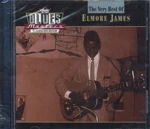 Buy from Amazon Blues Masters: The Very Best Of Elmore James
Junior Wells (harmonica, vocals) The most commercially successful artist on the label and one of its most prolific. Wells delivered both blues and uptempo R&B sides, often backed by Earl Hooker. Standout tracks:
- “Two Headed Woman” / “Lovey Dovey Lovely One” (Chief 7005, 1957)
- “I Could Cry” / “Cha Cha Cha in Blue” (Chief 7008, 1958)
- “Little by Little” / “Come on in This House” (Profile 4011, 1960) — written by Mel London; reached No. 23 on the Billboard R&B chart
- “Messin’ with the Kid” / “Universal Rock” (Chief 7021, 1960) — a lively, riff-driven classic that became one of Wells’s signature songs Other titles include “You Don’t Care,” “I’m a Stranger,” and “Things I’d Do for You.” These recordings helped establish Wells as a major Chicago blues force.
Earl Hooker (guitar) A brilliant and under-recognized guitarist, Hooker was central to the label’s sound. He appeared on dozens of tracks (roughly 40 titles and 25 singles) as leader, sideman, or featured artist for Wells, A.C. Reed, Lillian Offitt, Ricky Allen, and others. His own releases included slide and straight guitar instrumentals:
- “Blue Guitar” (Age, 1961/1962) — later overdubbed with vocals by Muddy Waters and released as “You Shook Me”
- “Blues in D Natural,” “Calling All Blues,” “The Leading Brand,” and various other instrumentals and vocal sides Hooker’s fluid, inventive playing (including early use of wah-wah and volume pedal effects) elevated many Chief sessions.
 Buy from Amazon Blues Masters, Vol. 18: More Slide Guitar Classics
Magic Sam (guitar, vocals) The West Side guitar innovator recorded several sides in 1960–1961:
- “Mister Charlie” / “My Love Is Your Love” (Chief 7013, with the Ammons Sisters)
- “Square Dance Rock” Parts 1 & 2 (Chief 7017)
- “Every Night About This Time” / “Do the Camel Walk” (Chief 7026) These early efforts display his fluid, modern electric style before his better-known Cobra and Delmark work.
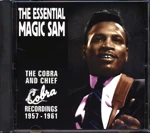 Buy from Amazon The Essential Magic Sam: Cobra & Chief Recordings 1957-1961
Lillian Offitt (vocals) A strong R&B/blues vocalist who scored regional success:
- “Will My Man Be Home Tonight” / “The Man Won’t Work” (Chief 7012, 1960) — written by Mel London
- “Oh Mama” / “My Man Is a Lover” (Chief 7015) Her sides often featured Earl Hooker’s guitar.
Ricky Allen (vocals) One of the later stars on the Age subsidiary:
- “Cut You A-Loose” / “Faith” (Age 29118, 1963) — written by Mel London; reached No. 20 on the R&B chart Allen had multiple singles on Age and was among the label’s more consistent sellers in its final years.
Other notable contributors
- A.C. Reed (sax, vocals): “Whole Lotta Lovin’” / “I Stay Mad” (Age 29123, 1964) and other sides.
- Big Moose Walker, Jackie Brenston (of “Rocket 88” fame), and various session players rounded out the roster.
- Mel London himself debuted the label with “Man from the Island” / “Doggin’ Me Around” (Chief 7000, 1957).
Decline and Legacy
Like many small blues labels of the era, Chief struggled with distribution, promotion, and cash flow. The Chief and Profile imprints were phased out first; Age continued briefly before the company folded in 1964. Some material later appeared on related or reissue labels, but the original singles remain prized by collectors.
Chief Records occupies an important place in Chicago blues history. It documented a vibrant transitional period, gave key platforms to Elmore James, Junior Wells, Earl Hooker, and Magic Sam, and produced songs that entered the blues canon (“Messin’ with the Kid,” “Little by Little,” “It Hurts Me Too,” “Blue Guitar”/“You Shook Me”). Mel London’s dual role as writer and producer helped shape a distinctive, high-energy sound that continues to influence blues and rock musicians.