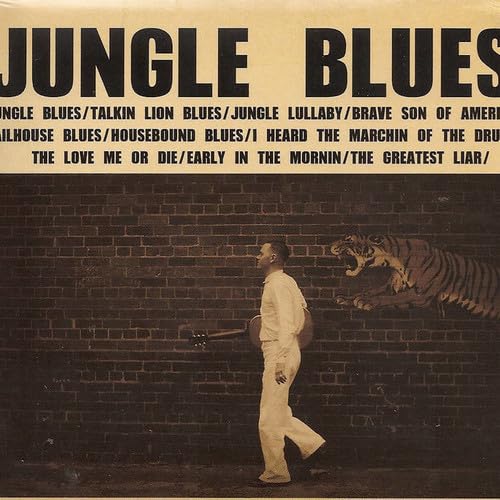
Released in October 2008 on Stoneking’s own independent label King Hokum Records (with distribution through Shock Records in Australia and later via Audiographic/Third Man internationally), Jungle Blues is the breakthrough second studio album by Australian singer-songwriter, multi-instrumentalist, and folklorist C.W. Stoneking (Christopher William Stoneking).
Where his 2005 debut King Hokum established Stoneking as an uncanny interpreter of 1920s and 1930s country blues and hokum ragtime, Jungle Blues represents an ambitious narrative and stylistic leap. The album synthesizes pre-war Delta blues, early New Orleans traditional jazz, 1930s Trinidadian calypso, vaudeville storytelling, and tropical exotica. Packaged around an elaborate, mock-autobiographical tall tale in which Stoneking survives a shipwreck off the coast of West Africa, Jungle Blues won the 2009 ARIA Award for Best Blues and Roots Album and propelled Stoneking from Melbourne’s underground roots scene onto the international stage.
Background and Context
C.W. Stoneking’s Origins and Musical Evolution
C.W. Stoneking was born in March 1974 in Katherine, Northern Territory, Australia. His parents were American expats; his father was the noted poet, playwright, and teacher Billy Marshall Stoneking, who was working with Indigenous communities in the Australian Outback at the time. Following his parents' separation, Stoneking was raised between remote Aboriginal settlements in the Outback, Sydney (Balmain), and the rural Victorian town of Castlemaine.
Stoneking discovered early American vernacular music as a teenager after coming across his father's collection of 1920s and 1930s 78-rpm recordings. He became captivated by the fingerpicking and slide techniques of Blind Willie McTell, Charley Patton, Son House, and Memphis Minnie, as well as the hot jazz of early New Orleans brass bands and the calypso records of Lord Kitchener, Wilmoth Houdini, and The Lion (Rafael de Leon).
Adopting a vintage 1931 National Duolian resonator guitar, a tenor banjo, and an archaic vocal patter characterized by a deep Southern-style drawl, Stoneking developed an idiosyncratic artistic persona. Rather than a modern revivalist playing vintage styles through a contemporary filter, Stoneking committed entirely to the sonic language, instrumentation, and narrative conventions of early 20th-century vernacular music.
The Concept of Jungle Blues
Jungle Blues is constructed around a theatrical concept outlined in Stoneking's elaborate liner notes and stage performances. The framing narrative claims that while traveling aboard a tramp steamer named the Veronica through the Caribbean and toward the Gulf of Guinea in the late 1920s, the ship was caught in a squall and destroyed.
According to this mythos, Stoneking was washed ashore in the Congo jungle, encountered local tribes, fell under voodoo curses, wrestled wild beasts, and eventually returned to tell the tale. This fantastical framing allows Stoneking to blend disparate pre-war musical strains:
- African and Caribbean rhythmic cadences (calypso, sea shanties, jungle exotica)
- Urban New Orleans brass counterpoint (horns, sousaphone, clarinet)
- Piedmont/Delta acoustic fingerpicking (National resonator, tenor banjo)
The Sessions and Production
Recording Details
- Recorded: 2007–2008
- Studios: Soundpark Studios (Northcote) and Adelphia Studio (Fitzroy), Melbourne, Victoria, Australia
- Producer: C.W. Stoneking
- Recording/Mixing Engineer: J. Walker (Jolyon Walker, frontman of Machine Translations)
- Mastering: Adam Dempsey at Deluxe Mastering, Melbourne
Stoneking chose to record the album in Melbourne using vintage microphones, direct analog tracking methods, and minimal modern processing. The aim was to recreate the acoustic dynamics of late-1920s shellac recordings without sacrificing fidelity.
The sessions were engineered by J. Walker, an accomplished multi-instrumentalist and producer known for his warm, organic, acoustic-focused production style. Walker and Stoneking arranged the band members close together in live room setups, capturing the natural bleed between horns, resonator guitar, and percussion to evoke the physical space of 1920s field and studio captures.
Personnel: The Primitive Horn Orchestra
A central development of Jungle Blues was Stoneking’s expansion from solo acoustic troubadour to bandleader, fronting The Primitive Horn Orchestra. The arrangements relied heavily on three-part brass counterpoint that mirrored early jazz funeral bands and Trinidadian calypso ensembles.
- C.W. Stoneking – Lead vocals, National resonator guitar, tenor banjo, arrangements
- Ross Irwin – Trumpet, flugelhorn
- Kynan Robinson – Trombone
- James Clark – Tuba, sousaphone, double bass
- Grant Arthur – Additional trombone, sousaphone
- Stephen Grant – Cornet, piano, accordion
- Kirsty Fraser – Backing vocals, duet harmonies
- J. Walker – Additional engineering, percussive touches
Track-by-Track Breakdown
1. "Ngounda"
- Songwriter: C.W. Stoneking
- Instrumentation: Choral harmony vocals, field-chant atmosphere
Analysis:
Serving as the conceptual overture to the album, "Ngounda" is a brief vocal chant that immediately establishes the tropical, nautical narrative. Singing in a stylized tribal/maritime chorus cadence, Stoneking sets the scene of a ship lost at sea approaching the dark coast of Africa. The vocal arrangement employs stacked, unpolished vocal harmonies that echo early 20th-century anthropological field recordings. It operates as a transition piece from the familiar world into the mythological jungle setting of the album.
2. "Jungle Blues"
- Songwriter: C.W. Stoneking
- Instrumentation: C.W. Stoneking (vocals, National resonator guitar), Ross Irwin (trumpet), Kynan Robinson (trombone), James Clark (tuba/sousaphone)
Analysis:
The title track is the centerpiece of the record's aesthetic. Driven by a slow, heavy, stomping tempo, the song introduces the Primitive Horn Orchestra in full force. The brass players provide a dirge-like, syncopated accompaniment that recalls Duke Ellington's early "jungle music" residencies at the Cotton Club in the late 1920s.
Stoneking’s National resonator provides a metallic, percussive chug beneath the horns. Lyrically, the song details his shipwreck and his disorientation in the African interior:
"The ship went down and left me there... / In the jungle, hear them drums roll."
His vocal delivery relies on a gravelly, guttural register that slides effortlessly between spoken narrative, falsetto shrieks, and blues moans. The interplay between Kynan Robinson’s tailgate trombone slides and James Clark’s sousaphone provides a dense, bottom-heavy sonic foundation.
3. "Talking Lion Blues"
- Songwriter: C.W. Stoneking
- Instrumentation: C.W. Stoneking (vocals, fingerpicked resonator guitar)
Analysis:
A masterclass in the traditional talking blues format—a rhythmic, spoken-word folk-blues style popularized by artists like Chris Bouchillon and Woody Guthrie. Stripping away the brass orchestra, this track presents Stoneking completely solo with his National guitar.
The piece is a humorous, deadpan tall-tale describing an encounter with an African lion. Stoneking’s fingerpicking provides a rapid, steady Piedmont-style alternating bassline over which he delivers comedic spoken verses with precise rhythmic timing. His mastery of dynamic pacing—speeding up the narrative, trailing off into conversational mutters, and punctuating punchlines with percussive slaps on the guitar body—demonstrates his roots in the pre-war hokum and minstrel traditions.
4. "Jungle Lullaby"
- Songwriter: C.W. Stoneking
- Instrumentation: C.W. Stoneking (vocals, guitar), Ross Irwin (trumpet), Kynan Robinson (trombone), James Clark (tuba), Kirsty Fraser (backing vocals)
Analysis:
"Jungle Lullaby" shifts the album's emotional register toward a romantic, melancholic ballad. Built on a gentle 3/4 waltz time signature, the song blends the harmonic sensibility of early Tin Pan Alley parlor songs with the tropical exotica of late-1930s Hawaiian and Caribbean music.
The muted brass lines create a soft, warm atmosphere, while Kirsty Fraser provides ethereal backing harmonies that contrast with Stoneking’s raw vocal delivery. The song demonstrates Stoneking's melodic range, illustrating that his style extends beyond raw blues into sophisticated, sweet jazz-age balladry.
5. "Brave Son of Africa"
- Songwriter: C.W. Stoneking
- Instrumentation: C.W. Stoneking (vocals, tenor banjo), Primitive Horn Orchestra, percussion
Analysis:
This track is Stoneking’s most explicit homage to 1930s Trinidadian calypso, heavily influenced by artists like Wilmoth Houdini and Attila the Hun. The instrumentation pivots from the guitar to the syncopated strumming of the tenor banjo, which drives the bright, galloping Caribbean rhythm.
The song pays narrative tribute to the legendary 1920s Pan-Africanist boxer Battling Siki (Louis Fall), the Senegalese fighter who defeated Georges Carpentier in Paris in 1922 to become the world light-heavyweight champion. Stoneking uses traditional calypso verse structure, rhyming couplets, and topical storytelling to chronicle Siki’s rise and tragic fall in New York City:
The horn section plays buoyant, celebratory riffs that capture the spirit of pre-war West Indian recordings made in Port of Spain and New York City.
6. "Goin' the Country"
- Songwriter: C.W. Stoneking
- Instrumentation: C.W. Stoneking (vocals, resonator guitar, foot percussion)
Analysis:
A fast-paced, high-energy Delta stomp, "Goin' the Country" returns Stoneking to his roots in country blues. Using an open tuning and bottleneck slide on his National guitar, Stoneking executes lightning-fast rhythmic lines that directly recall Charley Patton’s "Down the Dirt Road Blues" and Bukka White's driving train rhythms.
The percussive drive of the track is entirely acoustic, powered by Stoneking’s aggressive right-hand picking technique and amplified foot-tapping. Lyrically, the song addresses the classic blues theme of escaping urban tension for the rural countryside, showcasing Stoneking’s technical command of pre-war slide phrasing.
7. "Bad Luck Blues"
- Songwriter: Blind Lemon Jefferson (Arranged and adapted by C.W. Stoneking)
- Instrumentation: C.W. Stoneking (vocals, acoustic guitar)
Analysis:
The only traditional cover on the album, "Bad Luck Blues" is a reimagining of Texas blues pioneer Blind Lemon Jefferson’s seminal 1926 Paramount recording.
Stoneking transforms Jefferson’s idiosyncratic, free-form meter into a structured, mournful acoustic blues. He mimics Jefferson’s high, lonesome vocal cries while grounding the bottom end with his signature rhythmic picking. By including this track, Stoneking pays homage to the roots of his fingerstyle guitar technique and situates his own original compositions directly within the continuum of 1920s recording history.
8. "Sleepy Eyed Boy"
- Songwriter: C.W. Stoneking
- Instrumentation: C.W. Stoneking (vocals, banjo/guitar), Ross Irwin (trumpet), Kynan Robinson (trombone), James Clark (double bass)
Analysis:
"Sleepy Eyed Boy" is a relaxed, swinging ragtime number that showcases the tight dynamic control of the Primitive Horn Orchestra. The song's harmonic structure borrows from early jazz and hokum traditions, utilizing secondary dominants and circle-of-fifths progressions typical of 1920s dance-hall music.
The lyrical narrative tells a comic story of youth, laziness, and trouble-making in rural towns. Stoneking’s vocal performance is filled with conversational spoken asides, chuckles, and expressive timing that evoke the theatrical medicine-show routines of the Great Depression era.
9. "The Love Me or Die"
- Songwriter: C.W. Stoneking
- Instrumentation: C.W. Stoneking (vocals, tenor banjo), Ross Irwin (trumpet), Kynan Robinson (trombone), James Clark (sousaphone), Stephen Grant (accordion)
Analysis:
Arguably the most famous and critically acclaimed track on the album, "The Love Me or Die" combines a driving calypso-tango rhythm with a dark, vaudevillian murder ballad narrative. The instrumentation is enriched by the addition of accordion, which adds a Mediterranean/Caribbean sailor-shanty texture to the mix.
The lyrics narrate a dark tale of obsession, voodoo spells, and murder in the jungle. A desperate protagonist uses a love potion purchased from a witch doctor, with lethal consequences:
"I went to the doctor, I went to the witch / I went to the lady that lives in the ditch..."
The horn section provides dramatic musical stabs behind Stoneking’s impassioned vocal cries, creating a dynamic, cinematic build. The song became Stoneking’s signature piece and a staple of his live performances worldwide.
10. "Jailhouse Blues"
- Songwriter: C.W. Stoneking
- Instrumentation: C.W. Stoneking (vocals, resonator guitar), Primitive Horn Orchestra
Analysis:
The album concludes with "Jailhouse Blues," a slow New Orleans funeral-style march that brings the narrative arc of the album to a contemplative close. The song combines traditional prison-labor blues motifs with the solemn brass counterpoint of early jazz memorial marches.
The horns take turns improvising mournful fills around Stoneking’s slow, deliberate vocal lines and resonator chording. James Clark’s deep sousaphone pulses provide a heavy, walking pulse, mimicking a prisoner's trudging footsteps. As the song slowly fades out, it leaves the listener with the impression of an era vanished into history, serving as a poignant finale to the album's elaborate voyage.
Buy The Album
Critical Reception, Awards, and Commercial Impact
Upon its release in late 2008, Jungle Blues was met with widespread critical acclaim, initially across Australia and subsequently throughout the UK, Europe, and the United States.
• 2009 ARIA Music Awards:
WINNER: Best Blues & Roots Album
NOMINEE: Best Male Artist
NOMINEE: Best Independent Release
NOMINEE: Best Cover Art (Illustrated by C.W. Stoneking)
• 2009 AIR Awards (Australian Independent Record Labels Association):
WINNER: Best Independent Blues/Roots Album
• International Media:
Featured on BBC's "Later... with Jools Holland" (2008 & 2009)
Critical acclaim from MOJO, The Guardian, Uncut, and Pitchfork
Critics praised the record for avoiding the clinical sterility of standard roots revivalism. Reviewers noted that instead of merely copying old recordings, Stoneking had constructed a rich, imaginative artistic universe that treated pre-war blues, calypso, and jazz as vibrant, living narrative forms.
Significance and Legacy
1. The Legitimization of "Mythic" Roots Music
Jungle Blues represents a milestone in 21st-century roots music because of its embrace of theatrical world-building. Where most modern blues artists pursue realism or strict historical reenactment, Stoneking approached the genre as folklore and mythology. In doing so, he showed that the forms of the 1920s and 30s could be used to write imaginative narrative fiction.
2. Cross-Pollination of Calypso and Early Blues
While the historical crossover between West Indian music and African American blues is well documented by musicologists (particularly in port cities like New Orleans and New York during the 1920s), few modern recordings had explored this intersection. Jungle Blues brought pre-war calypso (typified by "Brave Son of Africa" and "The Love Me or Die") back into conversation with Delta slide guitar and brass-band jazz.
3. International Career Catalyst
Jungle Blues transformed C.W. Stoneking from a regional Australian cult artist into an internationally touring figure. It led directly to high-profile appearances on BBC's Later... with Jools Holland, major European festival bookings, and the attention of prominent artists like Jack White, who subsequently invited Stoneking to tour the United States and released his music via Third Man Records.
The success of Jungle Blues laid the creative and commercial groundwork for Stoneking’s follow-up masterpiece, 2014’s electric-gospel/R&B album Gon' Boogaloo.
Summary Matrix
| Category | Details |
|---|---|
| Artist | C.W. Stoneking |
| Album | Jungle Blues |
| Release Date | October 18, 2008 |
| Label | King Hokum Records / Shock Records (Cat # CHOK002) |
| Recorded At | Soundpark Studios & Adelphia Studio (Melbourne, Australia) |
| Producer | C.W. Stoneking |
| Recording Engineer | J. Walker (Jolyon Walker) |
| Mastering | Adam Dempsey (Deluxe Mastering) |
| Primary Instruments | 1931 National Duolian Resonator, Tenor Banjo, Tuba/Sousaphone, Trumpet, Trombone |
| Backing Band | The Primitive Horn Orchestra |
| Genre | Hokum Blues, 1920s Trad Jazz, Calypso, Delta Blues, Vaudeville |
| Major Awards | 2009 ARIA Award for Best Blues & Roots Album |