
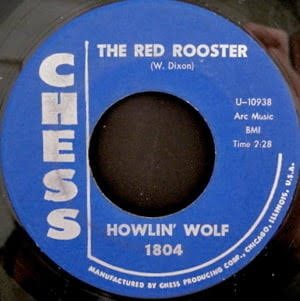
“The Red Rooster” (later widely known as “Little Red Rooster”), recorded by Howlin’ Wolf in June 1961 and released by Chess Records in October 1961 (Chess 1804, backed with “Shake for Me”), is one of the definitive slow Chicago blues recordings of the early 1960s and a cornerstone of the Willie Dixon–Howlin’ Wolf partnership. It appears on the classic 1962 album Howlin’ Wolf (often called the “Rockin’ Chair Album”) and has become a blues standard, especially after the Rolling Stones’ chart-topping cover.
Recording Sessions and Producer
Howlin’ Wolf recorded the song in Chicago in June 1961 at Chess Studios. The producers were Leonard Chess, Phil Chess, and Willie Dixon. The session also yielded the uptempo “Shake for Me.” Neither side charted at the time, but both became highly regarded classics. Wolf later re-recorded the song during the 1970 London Howlin’ Wolf Sessions with Eric Clapton, Bill Wyman, Charlie Watts, and others; a rehearsal take captures Wolf patiently teaching the British musicians the song’s distinctive timing and feel.
Songwriters — Detailed Focus
The song is credited to Willie Dixon. Dixon, Chess Records’ chief songwriter, house bassist, arranger, and producer, specialized in crafting material that fit the personas and strengths of the label’s major artists. For Howlin’ Wolf he often wrote songs that cast the singer as a powerful, larger-than-life, or proverbial figure. “The Red Rooster” fits this pattern: it is a didactic, parable-like blues that uses animal imagery to deliver folk wisdom about absence, desire, and disruption.
Dixon drew on a long tradition of rooster-themed blues and folk material. Clear antecedents include Charley Patton’s “Banty Rooster Blues” (1929), which shares the core idea of a rooster that will not crow for day and the sense of disorder when the dominant male figure is missing, and Memphis Minnie’s “If You See My Rooster (Please Run Him Home)” (1936). Dixon adapted and streamlined these ideas into a concise narrative tailored to Wolf’s voice and presence. The lyrics present the rooster as both a literal farmyard figure and a sexual metaphor (the “cock of the walk”), warning that once the rooster is gone, “there ain’t no peace in the barnyard.” Dixon’s gift was taking floating folk motifs, sharpening them into memorable, singable forms, and matching them to the right performer. Here he gives Wolf a slow, deliberate vehicle that allows the singer’s massive, authoritative voice and his rare slide-guitar playing to dominate.
Although Dixon is the sole credited writer, the song sits within the communal blues tradition of shared imagery and incremental adaptation. Dixon’s contribution was to formalize it into a modern Chess-style slow blues that highlighted Wolf’s strengths while remaining rooted in earlier Delta and country-blues language.
Musicians
- Howlin’ Wolf (Chester Burnett) — lead vocals and slide guitar (one of the relatively few Chess-era tracks on which he plays guitar)
- Hubert Sumlin — electric guitar
- Johnny Jones — piano
- Willie Dixon — double bass
- Sam Lay — drums
- Possible additional guitar by Jimmy Rogers (some accounts)
The sparse instrumentation keeps the focus on Wolf’s voice and the interplay between his slide and Sumlin’s electric guitar.
Musical Style and Analysis
“The Red Rooster” is a slow blues in the key of A, lasting approximately 2:25. While often described as a twelve-bar blues, the first section contains extra beats and irregular phrasing, giving the song a flexible, almost conversational timing that follows the vocal rather than a rigid grid. This elastic sense of time is one of its most distinctive features and later caused the British musicians on the London sessions some difficulty until Wolf demonstrated it himself.
The stylistic foundation is Wolf’s own slide guitar: a “slinky,” “sly,” dusty, country-tinged line that weaves in and out of the vocal phrases. It is one of only a handful of early-1960s Chess recordings on which Wolf plays guitar, and the slide work gives the track a raw, Delta-rooted atmosphere even within a Chicago electric setting. Hubert Sumlin’s complementary electric guitar provides sharp, supportive figures and string-bending accents. Johnny Jones’s piano, Dixon’s upright bass, and Sam Lay’s drums (often emphasizing a sparse, hard-hitting approach) complete a lean, atmospheric arrangement.
Wolf’s vocal is characteristically massive, hoarse, and authoritative—more spoken-sung proclamation than conventional melody. He delivers the lyrics with a preacher-like weight that suits Dixon’s parable structure. The overall mood is deliberate, slightly ominous, and sexually charged through the double meaning of the rooster imagery. The song builds tension through space and restraint rather than volume or speed; the gaps between phrases and the sliding guitar lines create a sense of unease and watchfulness that matches the lyric’s warning about the consequences of the rooster’s absence.
Buy The Album
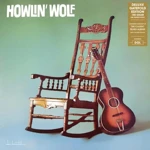 Buy from Amazon Howlin' Wolf (The Rockin' Chair Album)
Other Versions
The song’s reach expanded dramatically through covers:
- Sam Cooke recorded a smoother, more polished version that influenced later interpretations.
- The Rolling Stones released their version as a UK single in November 1964. It reached No. 1 on the British charts—the only traditional blues song ever to top the UK singles chart. Brian Jones’s slide guitar is prominent, and the arrangement stays close to the original’s slow, spacious feel while adding the Stones’ early rhythmic personality. The American label declined to issue it as a single, wary of the tempo and innuendo.
- Howlin’ Wolf himself revisited it on the 1969 psychedelic The Howlin’ Wolf Album and, more significantly, on the 1970 London Howlin’ Wolf Sessions.
- Other notable versions include those by Otis Rush, Albert King, and numerous blues and rock artists. The song remains a frequent jam and set-list staple.
Legacy
“The Red Rooster” / “Little Red Rooster” is a blues standard and one of Howlin’ Wolf’s most recognizable recordings. Its induction into the Rock and Roll Hall of Fame’s list of “500 Songs That Shaped Rock and Roll” underscores its influence. The Rolling Stones’ chart-topping cover introduced Wolf’s (and Dixon’s) work to a mass rock audience and helped fuel the British blues boom’s deeper engagement with Chess Records artists. The song’s flexible timing, slide-guitar foundation, and layered animal/sexual metaphor have kept it vital for both traditional blues performers and rock interpreters. More than sixty years later it continues to be performed, taught, and cited as a model of slow Chicago blues atmosphere and of Willie Dixon’s skill at turning folk wisdom into enduring song.









