"How Many More Years" is a foundational 1951 blues recording by Howlin' Wolf (Chester Arthur Burnett) that helped bridge Delta blues traditions with the electrified sound that shaped postwar Chicago blues and early rock ’n’ roll.
Recording Session and Production
The track was recorded in or about July 1951 (some sources suggest May or a range of July/August) at Sam Phillips’ Memphis Recording Service (706 Union Avenue, Memphis, Tennessee—the future Sun Studio). Phillips produced and engineered the session (Marion Keisker may also have been involved). He had not yet launched the Sun label and regularly leased masters to other companies. The recordings were leased to Chess Records in Chicago.
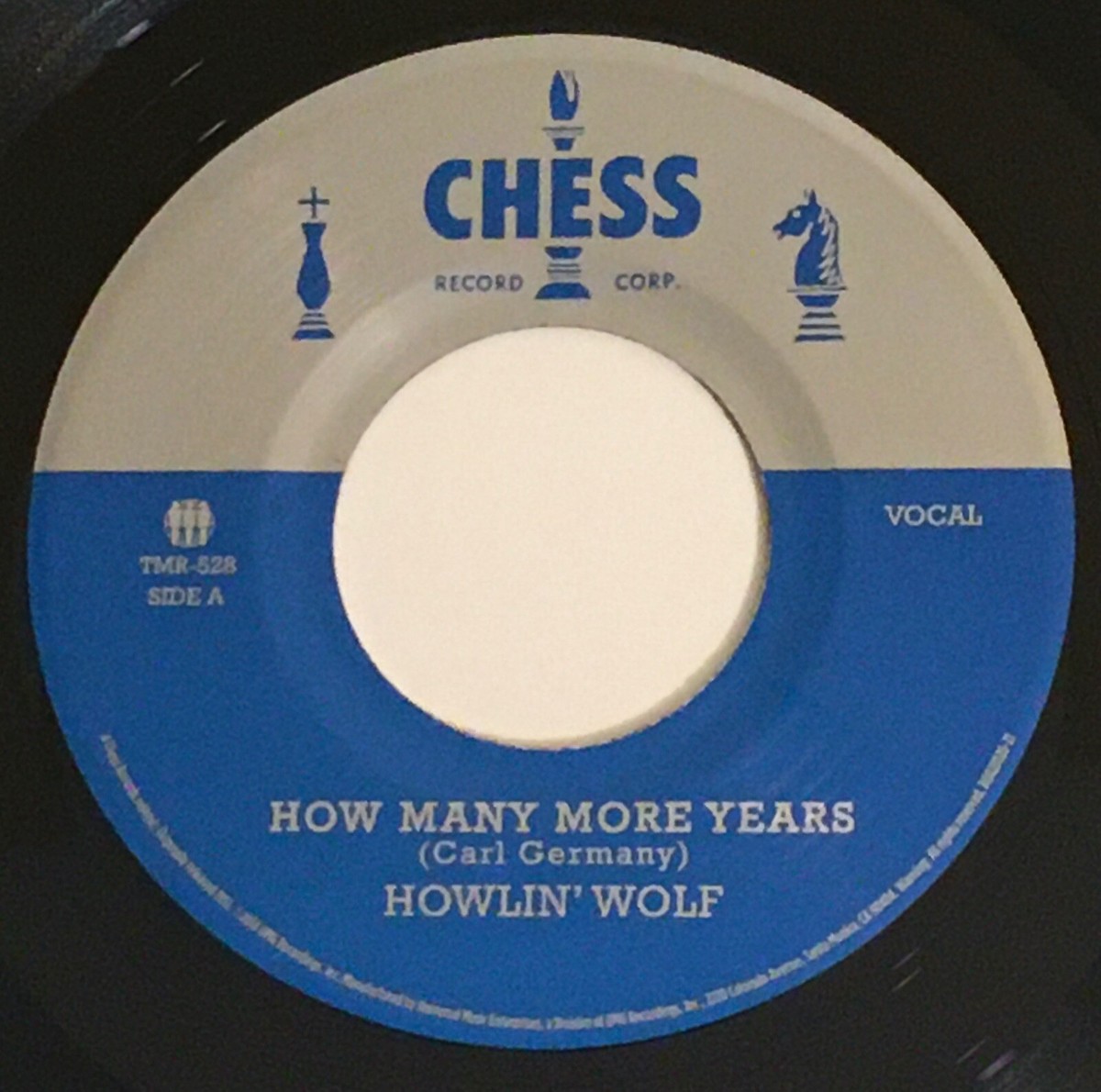
It was released in August 1951 (sources cite around August 15 or 31) as the B-side of Chess 1479, paired with “Moanin’ at Midnight” as the A-side. “Moanin’ at Midnight” charted first (reaching No. 10 on the Billboard R&B chart), but “How Many More Years” became the bigger hit, peaking at No. 4 on the Most Played Juke Box R&B Records chart (and No. 8 on Best Selling R&B). It was a double-sided success that launched Wolf’s national career.
Phillips’ production emphasized a raw, upfront rhythm section—pushing bass and drums forward in a way that was innovative for the era (when those instruments were often background). This approach, combined with intentional amplifier overdrive for distortion, contributed to the track’s powerful, proto-rock intensity.
Musicians
- Howlin’ Wolf (Chester Burnett): vocals and harmonica
- Willie Johnson: electric guitar
- Ike Turner: piano (widely credited; some sources note uncertainty or alternatives like Billy “Red” Love, and Phillips himself did not always recall Turner on the session, but consensus and multiple references support Turner)
- Willie Steele (or Steel): drums
No bass is listed on the primary accounts; the guitar and piano provide the low-end drive. Wolf’s band at the time was based in the West Memphis area, and Ike Turner (then a young talent scout and pianist) helped bring Wolf to Phillips’ attention after hearing him on local radio (KWEM).
Songwriters
The song is by Chester Burnett (Howlin’ Wolf), under his real name. Original Chess labels credited “Carl Germany” (a Chicago disc jockey and dance promoter). Chess sometimes assigned songwriting credits as favors or payoffs to people who helped promote records. Later reissues correctly restored credit to Burnett.
Guitarist Willie Johnson later claimed he contributed to the song on the way to the studio (“I’m the one who… printed it and put the words in his mouth”), but Wolf disputed this, and the official credit remains with Burnett. The lyrics and overall conception are classic Wolf: personal, direct, and rooted in traditional blues themes of romantic mistreatment and endurance.
Burnett drew on Delta blues traditions (he had been mentored earlier by Charley Patton) while adapting them to an electrified Memphis/West Memphis style. The song’s structure and themes fit the classic blues complaint form, with a personal, autobiographical edge reflecting the singer’s experiences.
Musical Style and Analysis
“How Many More Years” is a classic 12-bar blues in G (or G major/G7 territory), lasting about 2:43. It uses the traditional AAB lyrical pattern: a line is stated, repeated, then resolved with a concluding line.
Lyrics (core verses) focus on prolonged mistreatment in a relationship and the limits of tolerance:
- “How many more years have I got to let you dog me around? / How many more years have I got to let you dog me around? / I’d as soon rather be dead, sleeping six feet in the ground.”
- Later verses include falling on his knees, raising his hand, and ultimately packing clothes to leave (“I’m going upstairs, I’m gonna bring back down my clothes… If anybody ask about me, just tell ’em I walked outdoor”).
The narrator is a large, imposing man (Wolf was famously 6'6" and around 300 pounds) who feels dominated and contemplates escape or death rather than continued abuse. The ending leaves ambiguity about whether he will actually leave. Themes of betrayal, endurance, threatened departure, and emotional exhaustion are delivered with stark simplicity and repetition that heightens the hypnotic, insistent quality.
Musically, the track is driven by a heavy, repetitive bass-string boogie line on guitar (reminiscent of the traditional “Forty-Four” blues). Willie Johnson’s electric guitar is central and revolutionary: his aggressive, overdriven tone produces what many (including writer Robert Palmer) cite as one of the earliest—or the first—recorded uses of the distorted power chord in popular music. The guitar riffs are thick, riff-based, and proto-rock; T-Bone Burnett has highlighted the central guitar lick as one that became foundational to rock ’n’ roll, noting it was an old big-band idea transformed by distortion and context.
Ike Turner’s pounding, percussive piano provides rhythmic drive and fills. Willie Steele’s drums are hard and prominent. Wolf’s vocal is the defining element—gravelly, howling, immense, and almost otherworldly in its power and menace, with his harmonica adding train-whistle and moaning textures. The overall sound is raw, loud, and electrified Delta blues moving toward urban intensity: volume, distortion, and rhythm-section emphasis create a sense of weight and threat that feels heavier than much contemporary blues.
Sam Phillips’ production choices (upfront rhythm, acceptance of distortion and overload) were key. The result is often described as one of the earliest true rock ’n’ roll records in spirit—predating many canonical “first rock songs” by years—because of its rhythmic force, distorted guitar language, and aggressive energy.
Buy the Album
 Buy from Amazon Moanin’ in the Moonlight
Other Versions and Covers
Wolf himself revisited related material (e.g., later versions or reworkings connected to “No Place to Go”). Notable covers and adaptations include:
- Led Zeppelin’s “How Many More Times” (1969, from their debut album), which extensively borrows the title, lyrical approach, and blues structure (while also drawing on other sources); it extends the idea into a long hard-rock jam.
- Little Feat (medley with “Forty-Four Blues” on their 1971 debut).
- Freddie King (1972, Texas Cannonball).
- Fleetwood Mac and others under related titles such as “No Place to Go.”
- Later covers by artists including Big Jack Johnson, Groundhogs, R.L. Burnside, George Thorogood, B.B. King, Joe Bonamassa, and many blues and rock acts.
Wolf performed it live in high-profile settings, notably on the Shindig! TV show in 1965 (introduced by the Rolling Stones’ Brian Jones, with Billy Preston on piano), helping introduce him to broader rock audiences.
Legacy
The song introduced Howlin’ Wolf’s startling voice and presence to a national audience and established him as a major Chess artist. It exemplifies the transition from acoustic Delta blues to amplified, urban electric blues and is frequently cited as a key early rock ’n’ roll recording due to its distorted guitar, rhythmic emphasis, and raw power.
Willie Johnson’s guitar work is historically significant for the power chord and distortion. The track influenced British Invasion and blues-rock bands (Rolling Stones, Led Zeppelin, etc.), who championed Wolf and covered or adapted his material. It appears on classic compilations such as Moanin’ in the Moonlight (1959) and numerous Chess/Sun anthologies. Inducted into the Blues Hall of Fame (as a single), it remains a touchstone for blues authenticity, vocal intensity, and the birth of heavier electric styles. Its combination of traditional form with revolutionary sonic aggression continues to resonate in blues, rock, and beyond.
In short, “How Many More Years” is both a classic blues statement of endurance under mistreatment and a pivotal sonic document that helped define the future of popular music.