"Honest I Do" is one of the most significant recordings in the history of postwar blues and a pivotal moment in the crossover of blues music to mainstream pop audiences. Released by Vee-Jay Records in 1957, the song became Jimmy Reed's first top 40 pop hit, established his reputation as the most commercially successful blues artist of the era, and provided a template for the British blues-rock movement that would transform popular music less than a decade later.
The Song and Its Context
Composition and Songwriting
"Honest I Do" was written by Calvin Carter, Vee-Jay's legendary A&R man and producer, though it was first recorded by Jimmy Reed. Carter was the brother of Vee-Jay co-founder Vivian Carter and the principal architect of the label's sound. As one blues historian noted, "It turns out it was written by Calvin Carter, but first recorded by Reed's Vee-Jay."
The song's lyrics reveal a frustration beneath Reed's typically easygoing surface: "I told ya I love you, stop driving me mad...when I woke up this morning, I never felt so bad." The narrator is pleading for trust and honesty in a relationship, a theme that was universal enough to resonate with both Black R&B audiences and the emerging white pop market.
The Recording Session
Date and Location
"Honest I Do" was recorded in 1957 at Universal Recording Studios in Chicago, Illinois. While the exact session date is not definitively documented in available sources, it was part of the productive period that produced Reed's breakthrough hits for Vee-Jay.
The Producer
Calvin Carter (1925–1986) served as the session's producer. Carter was Vee-Jay's principal A&R man from the label's inception in 1953, and his production approach was distinctive: he handled vocals and arrangements while allowing the musicians to direct their own instrumental parts. As guitarist Lefty Bates recalled, "Calvin Carter was in charge of the recording sessions. Calvin was a singer, and when we recorded singers he would be saying things like, 'Hey, you all didn't sing the doo-wop right,' or 'you're out of tune with this one.'"
Carter's role in "Honest I Do" was particularly significant since he was also the song's composer. He understood exactly how the song should sound, and his direction of Reed's vocal — with its characteristic slurred delivery and relaxed phrasing — was crucial to the record's success.
The Musicians
The recording featured the core of Jimmy Reed's long-standing musical partnership and the Vee-Jay house band:
-
Jimmy Reed — vocals, guitar, harmonica
-
Eddie Taylor — second guitar
-
Vee-Jay house rhythm section — likely including Quinn B. Wilson on bass, Paul Gusman or Al Duncan on drums, and possibly Horace Palm or Norman Simmons on piano
Reed and Taylor had been friends since childhood in Dunleith, Mississippi. Taylor was two years older and had taught Reed to play guitar and harmonica. Their partnership was the foundation of Reed's sound: Reed's simple, repetitive guitar figures and harmonica interludes, combined with Taylor's more sophisticated second guitar, created a hypnotic, danceable groove that was instantly recognizable.
Reed's wife, Mary "Mama" Reed, played a crucial though often uncredited role in the sessions. She was known to sit near Jimmy, whispering lyrics in his ear while he sang, helping him remember words and maintain his place in the song. This practice became legendary in blues circles and was essential to Reed's ability to record despite his increasing struggles with alcohol and epilepsy.
Release and Chart Performance
"Honest I Do" was released as a single on Vee-Jay Records in 1957 with "Signals of Love" as the B-side. The record achieved remarkable commercial success:
-
Billboard R&B Chart: No. 4
-
Billboard Hot 100 Pop Chart: No. 32
This made "Honest I Do" Reed's first top 40 pop hit and his best-selling record to date. The crossover success was significant — while Reed had already established himself on the R&B charts with hits like "You Don't Have to Go" (1955) and "Ain't That Lovin' You Baby" (1956), "Honest I Do" demonstrated that his accessible, melodic blues could reach a mainstream white audience.
The single was later included on Reed's debut album, I'm Jimmy Reed (Vee-Jay LP 1003, 1958), which collected his early hits and established him as an album artist as well as a singles star.
The Sound and Style
"Honest I Do" exemplifies the Jimmy Reed formula that made him one of the most influential bluesmen of all time:
-
A slow-to-medium shuffling beat that was instantly danceable
-
Standard rhythm guitar riffs that were simple enough for any aspiring guitarist to learn
-
Casually appealing harmonica interludes that provided melodic hooks
-
A vocal approach prone to lyric slurring that gave Reed a distinctive, intimate sound
-
A two-guitar attack with Reed and Taylor creating a locked-in groove
This formula was deceptively simple. As music critic Cub Koda observed, Reed was "perhaps the most influential bluesman of all" due to his easily accessible style. The repetition that some critics found monotonous was precisely what made Reed's music so approachable — listeners could return to it again and again, finding comfort in its familiarity.
Cover Versions and Legacy
The Rolling Stones (1964)
The most significant cover of "Honest I Do" came from The Rolling Stones, who included it on their debut album, The Rolling Stones (released in the UK as The Rolling Stones, in the US as England's Newest Hit Makers), in 1964. The Stones' version introduced Reed's music to a massive international audience and provided Reed with what one account described as "a fat wad of royalty money" — significant income that was rare for blues artists of his generation.
The Rolling Stones' early set lists included multiple Jimmy Reed songs, and their entire approach to blues-rock was deeply influenced by Reed's simple, direct style. Mick Jagger's vocal technique — particularly his drawled, slurred delivery — owed a significant debt to Reed's example.
Other Covers
Beyond the Rolling Stones, "Honest I Do" has been recorded by numerous artists across genres, though the Stones' version remains the most commercially significant. The song's straightforward structure and universal theme of romantic pleading have made it a standard for blues and rock performers.
Influence on British Blues and Rock
"Honest I Do" was part of the bedrock of the British blues movement that produced the Rolling Stones, the Yardbirds, the Animals, and countless other groups. Reed's music was particularly suited to British interpretation because of its simplicity — young English musicians who were learning to play blues could master Reed's songs more easily than the complex Delta blues of Robert Johnson or the sophisticated jazz-blues of B.B. King.
As one historian noted, Reed's influence "extended to music's elite: Mick Jagger based his vocal technique on the blues singers of the '50s, Reed in particular, and Elvis Presley just flat-out loved his music."
Reed's Continued Success
"Honest I Do" was a turning point in Reed's career. After its success, he continued to place records on both the R&B and pop charts with remarkable consistency:
-
1957: "The Sun Is Shining" (first pop chart entry)
-
1958: "Down in Virginia," "I'm Gonna Get My Baby"
-
1959: "I Told You Baby"
-
1960: "Baby What You Want Me to Do" (pop No. 37)
-
1961: "Big Boss Man," "Bright Lights, Big City" (R&B No. 3, his highest-charting single)
-
1962: "Aw Shucks, Hush Your Mouth," "Good Lover"
-
1963: "Shame, Shame, Shame"
By the early 1960s, Reed was second only to B.B. King among popular blues acts, and his records were jukebox staples across America. His accessible style made him a favorite of both Black and white audiences, and his influence on the emerging rock and roll market was profound.
The Personal Struggle
Behind the commercial success, Reed was battling serious health issues. Around the time of "Honest I Do," he began experiencing epileptic seizures, complicated by his increasing alcohol consumption. His wife Mary remained by his side, whispering lyrics during recording sessions and helping him maintain his career despite his deteriorating condition. As one account noted, "As time rolled on, Jimmy took to drink more heavily, gradually making him less reliable and forcing those around him to take up the slack whenever possible."
The story of Mary Reed sitting near Jimmy, whispering the words in his ear while he sang, has become one of the most legendary tales in blues history. It was a testament to both their partnership and the extraordinary measures required to keep Reed's career going.
Legacy and Significance
"Honest I Do" stands as one of the most important blues recordings of the 1950s for multiple reasons:
-
Crossover Breakthrough: It was Reed's first top 40 pop hit, proving that blues could reach mainstream white audiences without losing its essential character.
-
British Invasion Foundation: The Rolling Stones' cover helped establish the British blues-rock movement and introduced Reed to a global audience.
-
Commercial Viability: The song demonstrated that an independent label like Vee-Jay could compete with the majors in the pop market, paving the way for other black-owned labels.
-
Artistic Accessibility: The song's simple, direct approach — repetitive, melodic, emotionally straightforward — established a template for blues that would influence generations of musicians.
-
Financial Impact: The royalties from the Rolling Stones' cover provided Reed with one of the few significant financial windfalls of his career, illustrating how British Invasion covers could transform the economic fortunes of American blues artists.
Jimmy Reed died in 1976 at age 50, his body worn down by alcoholism and epilepsy. But "Honest I Do" and his other recordings continue to resonate — in the grooves of original Vee-Jay 45s, in the reissue CDs, in the samples used by hip-hop producers, and in the DNA of every blues and rock band that ever played a shuffling two-chord groove. As one historian wrote, "Hopefully, Jimmy Reed won't ultimately be pushed so far into the distant regions of music memory as to be banished to some infinitesimal corner on a brittle scrap of outdated microfilm. I don't think it will happen."
For more information on Jimmy Reed please see this article Jimmy Reed: The Laid-Back King of Shuffle Blues
Suggested Reading
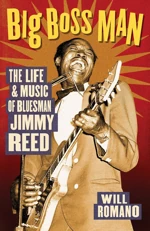 Big Boss Man: The Life and Music of Bluesman Jimmy Reed Buy from Amazon