“Just Make Love to Me” (better known as “I Just Want to Make Love to You”) is a classic Willie Dixon composition first recorded by Muddy Waters in 1954. It stands as one of the defining songs of the Dixon–Waters partnership and a cornerstone of electric Chicago blues.
Recording Session and Production
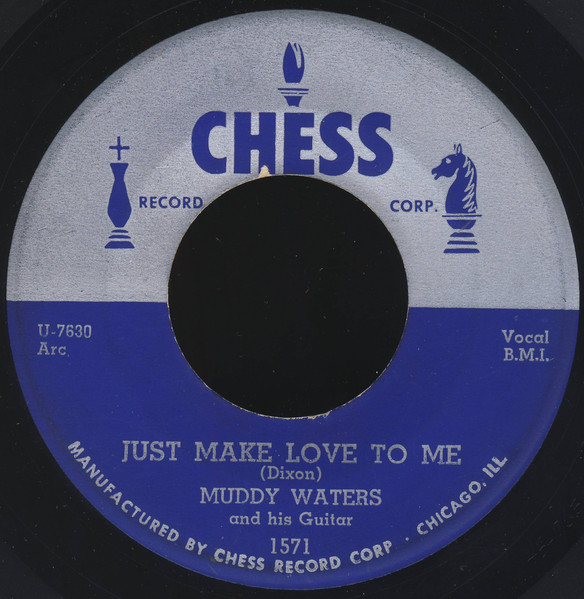
Muddy Waters recorded the song on April 13, 1954, in Chicago (at Universal Recording Studios). It was released in May 1954 as Chess 1571 under the title “Just Make Love to Me,” with “Oh Yeh” as the B-side. Producers were Leonard Chess and Phil Chess. The single reached No. 4 on the Billboard R&B Best Sellers chart.
Muddy later re-recorded the song for the 1968 psychedelic album Electric Mud.
Musicians
- Muddy Waters: vocals
- Little Walter: harmonica
- Jimmy Rogers: guitar
- Otis Spann: piano
- Willie Dixon: bass
- Fred Below: drums
This is the classic early-to-mid-1950s Muddy Waters band at its peak, with the addition of Fred Below (then associated with Little Walter’s group) on drums. The lineup delivers a tight, swinging Chicago blues groove.
Songwriters
Willie Dixon is the sole songwriter. Dixon was Chess Records’ house bassist, arranger, producer, and most important songwriter of the 1950s. He specialized in crafting material that amplified an artist’s existing strengths and public image. For Muddy Waters he wrote a series of powerful, sexually charged, and often humorous songs—“Hoochie Coochie Man,” “I’m Ready,” “I Just Want to Make Love to You,” and others—that helped define Muddy’s swaggering, larger-than-life persona.
Dixon’s approach was pragmatic and audience-focused. He once explained the bluntness of the lyric by noting that people naturally think and say things like “I’d like to make love to you,” and that songs should reflect real life and desires. The lyrics reject traditional domestic roles and expectations:
- “I don’t want you to be no slave / I don’t want you to work all day”
- “I don’t want you to wash my clothes / I don’t want you to keep our home”
- “I don’t want you to cook my bread / I don’t want you to make my bed”
Instead, the narrator states a single, clear desire: “I just want to make love to you.” The song is both a direct expression of physical desire and a rejection of conventional relationship obligations. In the context of 1950s blues, this frankness was striking and progressive in its own way—emphasizing mutual pleasure and personal freedom over duty or possession.
Dixon tailored the song to Muddy’s deep, commanding voice and the band’s rhythmic strength. The result is a seductive, mid-tempo blues that balances humor, sensuality, and authority. Dixon’s writing here exemplifies his gift for creating simple, memorable statements that feel both personal and universal.
Musical Style and Analysis
“Just Make Love to Me” is a mid-tempo Chicago blues lasting about 2:49. It follows a modified 12-bar blues structure with a strong, repeating riff that is more fluid than a strict stop-time figure. Otis Spann’s piano carries much of the main riff, with Willie Dixon’s bass locking in underneath. Little Walter’s harmonica provides expressive fills and a notable solo, while Jimmy Rogers’ guitar offers rhythmic support and counterpoint. Fred Below’s drums keep a steady, slightly swinging pulse.
Muddy’s vocal performance is central. He delivers the lines with a husky, almost conversational authority that shifts between low growls and more urgent phrases. The famous bridge—“I can tell by the way you switch and walk / I can see by the way you baby talk…”—breaks the pattern with a more intense, declarative statement before returning to the main groove. The overall feel is slinky, confident, and seductive rather than aggressive.
The arrangement is a model of mid-1950s Chess production: full but not cluttered, with each instrument given space to contribute to a unified, hypnotic groove. The song’s strength lies in the interplay between the insistent riff, Muddy’s commanding voice, and the band’s relaxed yet precise execution.
Suggested Listening
 Buy from Amazon Muddy Waters Anthology
Other Versions and Covers
The song has been widely covered across blues, R&B, rock, and beyond. Notable versions include:
- Etta James (1960, on At Last!; later re-popularized in a 1990s Diet Coke campaign)
- The Rolling Stones (1964, on their debut album)
- Foghat (studio version 1972; major live hit from Foghat Live, 1977)
- Chuck Berry, Van Morrison, the Animals, Mungo Jerry, Buddy Guy, and many others
Muddy’s own Electric Mud remake placed the song in a psychedelic context, while Foghat’s extended live version became a classic-rock radio staple.
Legacy
“Just Make Love to Me” / “I Just Want to Make Love to You” is one of the most successful and enduring songs from the golden era of Chess blues. It showcased the perfect combination of Willie Dixon’s sharp songwriting, Muddy Waters’ authoritative delivery, and the peak form of his classic band. The track’s commercial success (No. 4 R&B) and its later adoption by rock artists helped carry Chicago blues into the rock era.
Its frank celebration of desire, memorable riff, and flexible structure have made it a standard for both blues and rock performers. Along with “Hoochie Coochie Man” and “I’m Ready,” it remains a defining statement of Muddy Waters’ mid-1950s peak and a key example of how Willie Dixon shaped the sound and attitude of postwar electric blues.