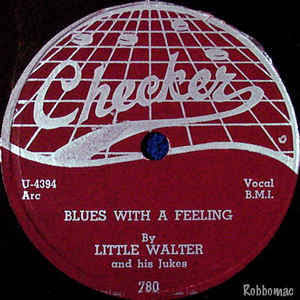
“Blues with a Feeling” is one of Little Walter’s most important and influential recordings. Released in 1953, it became a major R&B hit and a foundational piece in the modern blues harmonica repertoire. Although based on an earlier jump-blues song, Walter’s version transformed it into a slow, atmospheric Chicago blues classic defined by his groundbreaking amplified harmonica.
Recording Session and Production
Little Walter recorded “Blues with a Feeling” on July 23, 1953, at Universal Recording Studios in Chicago for Checker Records (a Chess subsidiary). The single was released as Checker 780, backed with the instrumental “Quarter to Twelve.” It entered the Billboard R&B charts in October 1953, peaking at No. 2 on the Juke Box chart and spending 11 weeks on the charts. Producers were Leonard Chess and Phil Chess.
An alternate take from around the same period (sometimes listed as September 1953) has also circulated on later compilations; it is very similar to the issued master.
Musicians
- Little Walter (Marion Walter Jacobs): vocals and harmonica
- Louis Myers and Dave Myers (The Aces): guitars
- Willie Dixon: upright bass
- Fred Below: drums
(Some accounts suggest Jimmy Rogers may have been present on guitar, but the core support came from the Myers brothers and the classic Chess rhythm section of Dixon and Below.) This was one of the strongest working units in Chicago blues at the time, and their interplay—especially the dialogue between Walter’s harmonica and the guitars—is a key feature of the recording.
Songwriters
The original song was written by Rabon Tarrant and first recorded in May 1947 by Tarrant with Jack McVea and His All Stars (or Door Openers) as the B-side of “Slowly Goin’ Crazy Blues.” Tarrant’s version is a mid-tempo jump blues with a strong backbeat, saxophone, and trumpet, performed in a lighter, more swinging style typical of late-1940s West Coast/jump blues.
Little Walter adapted the song extensively. He retained the core lyrical idea and much of the verse structure but slowed the tempo dramatically, shifted the focus to amplified harmonica, and gave the piece a darker, more introspective Chicago blues feeling. Although Tarrant is the original writer, most subsequent releases (and nearly all popular recognition) credit the song to Little Walter (Walter Jacobs). This reflects both the transformative nature of Walter’s arrangement and the common practice of the era, in which a major reinterpretation often resulted in a new writing credit.
Walter’s lyrics stay close to the emotional core of the original:
“Blues with a feeling, that’s what I have today
Blues with a feeling, that’s what I have today
Gonna find my baby, yes if it takes all night and day”
The simplicity of the words allows the performance—especially the harmonica—to carry the emotional weight. Walter’s version emphasizes loneliness, longing, and a quiet intensity that the jump-blues original only suggested.
Musical Style and Analysis
“Blues with a Feeling” is a slow 12-bar blues lasting approximately 3:05–3:10. It opens with one of Walter’s most distinctive and widely imitated harmonica introductions: a sustained, slightly distorted, emotionally charged phrase that immediately establishes the mood. Throughout the track, Walter uses his amplified harmonica both as accompaniment and as a lead voice, cupping the microphone to create a thick, vocal-like tone with natural distortion and sustain.
His vocal delivery is restrained and intimate, almost conversational, which contrasts with the more aggressive or boastful sides he sometimes recorded. The Myers brothers supply clean, supportive guitar lines that weave around the harmonica without competing with it. Willie Dixon’s bass and Fred Below’s shuffling brush work (or light stick work) provide a steady, unhurried pulse that gives the song space to breathe.
The arrangement is a masterclass in dynamics and interplay. Walter’s harmonica fills and responses to his own vocal lines create a call-and-response effect within a single instrument, while the band remains tightly controlled. The result is atmospheric, melancholic, and deeply expressive—qualities that made the record a template for slow blues harmonica playing.
Stylistically, the track marks a clear evolution from the jump-blues source material into the electric Chicago blues aesthetic that Chess specialized in. Walter’s amplification technique and phrasing helped establish the harmonica as a lead instrument capable of matching the power and expressiveness of the electric guitar.
Buy The Album
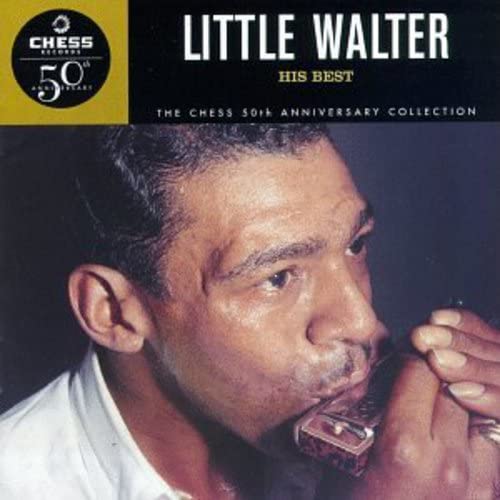 Buy from Amazon His Best: The Chess 50th Anniversary Collection
Other Versions and Covers
“Blues with a Feeling” is one of Little Walter’s most covered songs. Notable versions include:
- Paul Butterfield Blues Band (1965 debut album) — a key recording that helped introduce the song to the 1960s blues-rock audience
- Taj Mahal
- Magic Slim & the Teardrops
- Carey Bell and Lurrie Bell
- Luther Allison
- George “Harmonica” Smith
- Fleetwood Mac (in various blues contexts)
- Numerous contemporary harmonica players and blues bands
It remains a standard in the repertoire of blues harmonica players and is frequently cited as an essential learning piece.
Legacy
“Blues with a Feeling” is widely regarded as a blues standard and one of the most important recordings in the history of the harmonica. Blues historians and harmonica instructors often describe it as a foundational piece that inspired countless players to take up the instrument. Its combination of emotional depth, innovative amplified tone, and elegant arrangement helped define the sound of modern Chicago blues harmonica.
The song also gave its name to the definitive biography of Little Walter (Blues with a Feeling: The Little Walter Story by Tony Glover, Scott Dirks, and Ward Gaines). Together with tracks such as “Juke,” “My Babe,” and “Last Night,” it cemented Walter’s reputation as the most influential harmonica player of the postwar era and remains one of his most enduring and frequently performed works.