
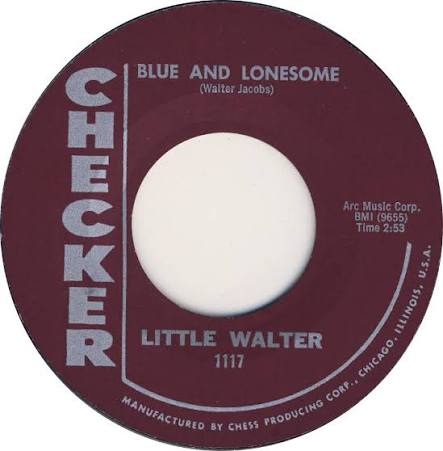
“Blue and Lonesome” is a late-period Little Walter recording from 1959 that captures the harmonica master in a raw, emotionally exposed mood. Though not a major hit at the time, it has become one of his most respected and frequently cited tracks, later lending its name to the Rolling Stones’ 2016 all-blues album.
Recording Session and Production
Little Walter recorded “Blue and Lonesome” on August 12, 1959, at Chess Studios in Chicago. The track was paired with “One of These Mornings” from the same session. It remained unissued for several years and was finally released in 1965 as the B-side of Checker 1117 (“Mean Ole Frisco”). Producers were Leonard Chess and Phil Chess (standard for Checker/Chess sessions of the era).
By 1959 Little Walter’s commercial peak had passed. His last charting single had come earlier that year, and personal struggles (including alcohol and health issues) were increasingly affecting his career. The session reflects a more introspective phase of his work.
Musicians
- Little Walter (Marion Walter Jacobs): vocals and harmonica
- Luther Tucker: guitar
- Freddy Robinson (Fred Robertson): guitar
- Willie Dixon: bass
- George Hunter: drums
The lineup is lean and effective. Tucker and Robinson provide interlocking guitar parts, Dixon anchors the groove on bass, and Hunter keeps a steady, understated beat that leaves space for Walter’s voice and harmonica.
Songwriters
Little Walter (credited as Walter Jacobs) is the songwriter. The song is an original composition that draws on classic blues themes of isolation, heartbreak, and existential loneliness. It is distinct from Memphis Slim’s earlier 1949 song of the same title (sometimes credited under Slim’s pseudonyms); the two pieces share only the opening phrase and the general mood of desolation.
Walter’s lyrics are stark and direct:
“I’m blue and lonesome as a man can be
I’m blue and lonesome as a man can be
I got a worried mind, and I just can’t be free”
He expands the theme with images of casting his troubles into the sea so that “the whales and the fishes have a fuss over me.” The language is simple yet vivid, typical of the best postwar Chicago blues writing. Walter had long been a skilled interpreter of other people’s material (including songs associated with Muddy Waters and Willie Dixon), but here he crafts a personal statement of emotional exhaustion.
The songwriting reflects both the traditional blues vocabulary of loneliness and Walter’s own circumstances in the late 1950s. After years of chart success beginning with the instrumental “Juke” in 1952, his life had grown increasingly turbulent. The lyric’s sense of being worn down and adrift carries an autobiographical weight that later listeners have recognized.
Musical Style and Analysis
“Blue and Lonesome” is a slow-to-mid-tempo 12-bar blues lasting roughly 2:50–3:00. It is performed in a minor-key feel that heightens the melancholy atmosphere. The arrangement is sparse and deliberate, allowing Walter’s amplified harmonica and weary vocal to dominate.
Walter’s harmonica playing remains the defining element. Even in a more subdued setting he displays the tonal control, expressive bends, and amplified intensity that revolutionized the instrument. His solo is compact and sharply constructed—less flashy than some of his earlier showpieces, but deeply felt and perfectly matched to the lyric’s mood. The guitar work is supportive rather than flashy, with clean, interlocking lines that leave space for the harmonica. Dixon’s bass and Hunter’s drums provide a solid, unhurried foundation.
Vocally, Walter sounds older and more worn than on his mid-1950s hits. The voice carries a lived-in quality that suits the song’s theme of exhaustion and isolation. The overall effect is intimate and haunting—less celebratory than his jump-blues sides, more introspective and vulnerable.
Stylistically the track sits at the intersection of classic Chicago blues and a more personal, late-night mood. It demonstrates that Walter’s artistry extended beyond the high-energy instrumentals and uptempo vocal numbers that made him famous.
 Buy from AmazonHis Best: The Chess 50th Anniversary Collection
Other Versions and Covers
The most prominent later version is by the Rolling Stones, who recorded it during the sessions for their 2016 album Blue & Lonesome (the album takes its title from this song). Keith Richards suggested the track as a way to break in a new studio; the band’s performance helped set the tone for the entire project. Other covers and interpretations include versions by Robben Ford, Kim Wilson, Billy Branch, John Primer, and various contemporary blues artists.
Legacy
“Blue and Lonesome” is now regarded as one of Little Walter’s strongest late-period recordings. It showcases a more vulnerable side of the harmonica giant and has gained stature over time, especially after the Rolling Stones’ high-profile cover. The song stands as a reminder that Walter’s genius was not limited to the explosive instrumentals and chart hits of the early-to-mid 1950s; he could also deliver quiet, emotionally penetrating blues of lasting power.
In the broader history of Chicago blues, the track illustrates both the continuing vitality of the Chess/Checker roster in the late 1950s and the personal cost of the lifestyle that produced so much great music. It remains a favorite among harmonica players and blues aficionados for its mood, economy, and the unmistakable sound of Little Walter at his most reflective.









