Montgomery Ward Records was an American budget record label operated by the major retailer Montgomery Ward & Co. from 1933 to 1941. Sold exclusively through the company’s mail-order catalogs and retail stores at deeply discounted prices (initially as low as 21 cents each or roughly $1.80 for ten), the label specialized in affordable 78 rpm discs. While country music formed a major part of its offerings for rural customers, Montgomery Ward also issued a substantial body of “race records”—blues, gospel, and Black popular music—drawn largely from RCA Victor and Bluebird masters. These budget pressings helped circulate important blues recordings to a wide national audience that might not have purchased full-priced discs.
History and Ownership
Montgomery Ward, founded in 1872 by Aaron Montgomery Ward as a pioneering mail-order house, had long sold phonographs and records. In 1933, after the supply of its previous house brand (Broadway Records) ended, company president Sewell Avery arranged with RCA Victor to produce a new low-priced label. RCA pressed the initial discs, granting access to a deep vault of Victor and Bluebird masters that included popular, country, ethnic, classical, and race material. Catalog series included M-4200 (covering popular, country, race, and ethnic) and M-6000 (classical).
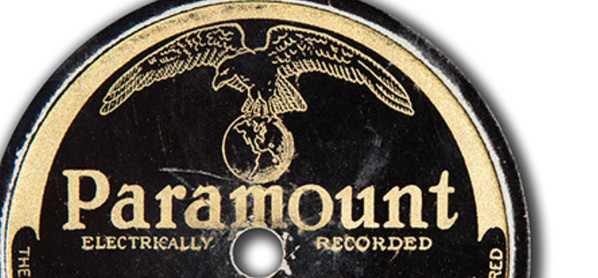
The label also had shorter arrangements with Decca (yielding some Decca and Gennett-derived sides) and Eli Oberstein’s United States Record Corporation (Varsity/Roya le), which supplied additional masters from Crown, Paramount, Gennett, and other sources. RCA remained the primary and highest-quality supplier. Production ceased in December 1941 when the RCA agreement ended. The parent retailer’s broader corporate history included leadership under Sewell Avery and wartime government interventions, but the record label itself was a focused Depression-era initiative aimed at volume sales through Ward’s vast catalog network.
Notable Artists and Recordings — with Emphasis on Blues and Race Records
Montgomery Ward’s race series drew heavily from Bluebird, RCA’s important budget label that recorded extensively in the blues field (particularly Chicago and Southern blues under producers such as Lester Melrose). As a result, Ward pressings became alternate, low-cost sources for significant blues material.
Blues and Race Recordings The label’s race offerings included blues sides that made urban and rural Black music accessible via mail order. Because many masters originated on Bluebird or Victor, Montgomery Ward discs often represent the most common surviving copies of certain titles for collectors. While individual artist credits on Ward labels followed the original sources, the catalog encompassed the rich Bluebird blues roster of the 1930s. This included piano blues, guitar blues, and small-group performances typical of the era’s commercial race market. The availability of these records through Ward’s catalogs—widely distributed in both rural and urban areas—helped broaden the reach of blues beyond specialty race-record dealers.
Tampa Red One of the most extensively represented blues artists on the label. Multiple 1939 Chicago sessions appeared on Montgomery Ward, including:
- M-8565: “You Say It’s Love” / “Please Don’t Throw Me Down”
- M-8566: “Poor Old Gal Blues” / “You Got to Give Me Some”
- M-8567: “Nobody Knows How Bad I Feel” / “No Good Woman Blues”
- M-8568: “Booze Head Woman” / “If I Had Known”
- M-8569: “Bessemer Blues” / “Sad Letter Blues”
- M-8796: “I Got a Big Surprise for You” / “My Two Women”
These sides showcase Tampa Red’s signature slide guitar and urban blues style.
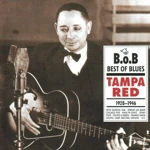 Tampa Red 1928-46
Washboard Sam Another major Bluebird blues artist whose work was issued on Ward:
- M-8570: “I Believe I’ll Make a Change” / “That Will Get It”
- M-8571: “Booker T Blues” / “Diggin’ My Potatoes”
- M-8572: “I Love My Baby” / “Good Old Easy Street”
- M-8573: “This Time Is My Time” / “Wasn’t He Bad”
Sonny Boy Williamson (John Lee Williamson) Key harmonica-driven blues sides:
- M-8574: “Good for Nothing Blues” / “Sugar Mama Blues #3”
- M-8575: “Bad Luck Blues” / “My Little Baby”
- M-8576: “Doggin’ My Love Around” / “Little Low Woman Blues”
- M-8577: “T.B. Blues” / “Good Gravy”
- Additional titles such as “Joe Louis and John Henry Blues,” “Thinking My Blues Away,” and others in the same numerical range.
Speckled Red (Rufus Perryman) Piano blues:
- M-7918: “Welfare Blues” / “Early in the Mornin’” (recorded December 1938).
Little Brother Montgomery
- Sides such as those paired with related artists (e.g., material from his 1936 New Orleans sessions appeared under Montgomery Ward numbers corresponding to Bluebird issues, including piano blues like “Vicksburg Blues” variants and related titles).
Other blues or blues-related artists whose material reached Montgomery Ward pressings include figures from the broader Bluebird race catalog (such as washboard and small-group blues acts). These budget issues made important 1930s Chicago and Southern blues widely available at low cost through Ward’s catalogs and stores, often serving as the primary or only affordable source for rural and working-class buyers.
Country and Old-Time Artists (major complementary strength)
- Jimmie Rodgers — Extensive reissues of his blue yodels and classic sides (e.g., couplings featuring “Blue Yodel No. 4” and “Mississippi River Blues”), which remained strong sellers with rural buyers.
- Gene Autry — Early Western and cowboy recordings that expanded his audience.
- The Carter Family — Foundational Appalachian and old-time sides from their Victor catalog.
- The Delmore Brothers and other string-band and harmony acts whose material found a ready market.
Many of these country releases are prized because some masters received limited issue on full-priced labels.
Popular, Jazz, Ethnic, and Classical Material The label also carried popular dance and vocal sides, ethnic recordings (including Mexican and other foreign-language material), older acoustic-era artists such as Henry Burr and Cal Stewart, and a dedicated classical series (M-6000). Some jazz-oriented Bluebird/Victor material likewise appeared.
Legacy
Montgomery Ward Records occupies an important niche among Depression-era budget labels. By offering RCA-pressed reissues—including a meaningful selection of race and blues recordings—at rock-bottom prices through one of the nation’s largest retail and catalog networks, it expanded access to vernacular American music. The blues and race sides, drawn from Bluebird’s strong 1930s catalog, helped circulate Black music to diverse audiences, while the extensive country holdings preserved and popularized key early country masters. Although the label did not generate large numbers of original sessions, its role in disseminating blues, country, and popular recordings during hard economic times remains significant. Surviving Montgomery Ward discs continue to be sought by collectors of 78 rpm blues, country, and budget-label history.