“Rollin’ Stone” is a foundational Muddy Waters recording from 1950 that helped define the transition from Delta blues to electric Chicago blues. It is Muddy’s interpretation of the traditional “Catfish Blues” and became one of the most culturally influential blues songs of the postwar era.
Recording Session and Production
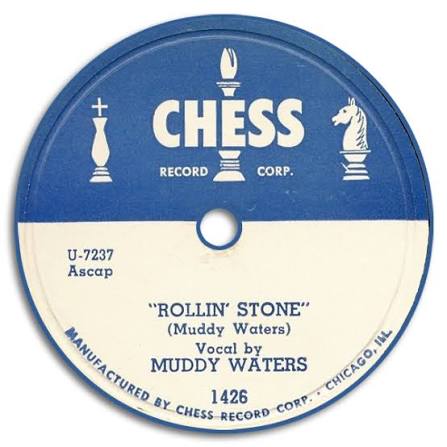
Muddy Waters recorded “Rollin’ Stone” in February 1950 at Universal Recording Studios in Chicago. It was released in June 1950 as Chess 1426, backed with “Walkin’ Blues.” This was one of the earliest releases on the newly renamed Chess Records label (previously Aristocrat) and Muddy’s first single under the Chess imprint.
Producers were Leonard Chess and Phil Chess. The recording is essentially a solo performance by Muddy on vocals and electric guitar, with some accounts noting minimal bass support (Ernest “Big” Crawford appears on related sessions, though the core track is Muddy alone). The sparse arrangement emphasizes space, silence, and the weight of individual notes. The single sold approximately 70,000 copies and was important enough to allow Muddy to quit his day job.
Musicians
- Muddy Waters (McKinley Morganfield): vocals and electric guitar (slide/bottleneck)
The track is deliberately sparse. Muddy’s amplified slide guitar and powerful voice carry the entire performance, creating an intimate yet intense atmosphere that retains the feel of Delta blues while introducing the electric edge that would define his Chicago work.
Songwriters
Muddy Waters is credited as the songwriter. The song is his personal adaptation of the traditional Delta blues “Catfish Blues,” a floating song form that had circulated in Mississippi for years. Robert Petway recorded a well-known version titled “Catfish Blues” in 1941 for Bluebird, and Tommy McClennan cut a related “Deep Blue Sea Blues” around the same time. Muddy knew these pieces from his Delta upbringing and reshaped them into something distinctly his own.
He retained the central catfish imagery and the sense of restless movement, but added new verses that personalize the theme of rootlessness. The most famous addition is the autobiographical-sounding couplet:
“Well my mother told my father just before I was born
‘I got a boy child comin’, gonna be, gonna be a rollin’ stone
Sho’ enough he’s a rollin’ stone’”
This verse draws on the proverb “a rolling stone gathers no moss,” transforming it into a statement of identity. Muddy presents himself as inherently restless—someone who cannot stay in one place or settle down. The lyrics mix traditional floating verses with personal assertion, a hallmark of how Delta bluesmen adapted shared material.
In 1951 Muddy reused the same melody and guitar figure for “Still a Fool” (sometimes known as “Two Trains Running”), which reached No. 9 on the Billboard R&B chart. Later performances and covers often blend lyrics from both songs. Muddy’s approach here is classic folk-blues composition: he takes an existing traditional form, filters it through his own experience and voice, and creates a new standard that feels both ancient and original.
Musical Style and Analysis
“Rollin’ Stone” is a mid- to slow-tempo electric blues lasting about 3:05, performed in the key of E in 4/4 time. It is often described as a “brooding, minor-hued drone piece.” The vocal sections largely stay on the tonic (I) chord, giving the song a modal, hypnotic quality typical of older Delta blues, while the instrumental passages introduce the IV and V chords.
Muddy’s electric slide guitar is the central instrumental voice. He uses a bottleneck to produce long, sustained notes, crying bends, and resonant drones that hang in the air. The arrangement is full of space—pauses and silences that create tension and anticipation. This “power of a pause” is one of the recording’s most striking features. The guitar tone is raw and amplified, bridging the acoustic Delta tradition and the emerging urban electric sound.
The vocal performance is deep, authoritative, and slightly ominous. Muddy sings with a sense of quiet intensity rather than outright aggression. His phrasing is flexible and conversational, stretching lines and using blue notes to heighten the feeling of restlessness. The overall effect is meditative yet unsettled—a musical embodiment of the “rolling stone” who never stays still.
Structurally the song helped introduce a more riff-based approach into Muddy’s work. The guitar figure is repeated and subtly varied, creating a hypnotic foundation over which the vocal floats. This riff-centered style would become increasingly important in his early-1950s recordings and influence the development of Chicago blues and later rock.
Suggested Listening
 Buy from Amazon Rollin Stone: The Golden Anniversary Collection
Other Versions and Covers
Muddy himself revisited the material in “Still a Fool” (1951). Notable later versions and related performances include:
- Jimi Hendrix (“Catfish Blues,” incorporating elements of both “Rollin’ Stone” and “Still a Fool”; this material fed into “Voodoo Chile” and “Voodoo Child (Slight Return)”)
- The Rolling Stones (“Rolling Stone Blues” on the 2023 album Hackney Diamonds)
- Humble Pie
- Paul Rodgers (with Jeff Beck)
- Johnny Jenkins (with Duane Allman)
- Various traditional and revival blues artists
The song has been widely covered and referenced across blues and rock.
Legacy
“Rollin’ Stone” is one of the most culturally significant blues recordings of the 20th century. It directly inspired the name of the Rolling Stones (Brian Jones took the band’s name from the song) and contributed to the naming of Rolling Stone magazine. Bob Dylan’s “Like a Rolling Stone” also draws on the same proverbial and cultural lineage.
The track was inducted into the Grammy Hall of Fame in 2000 and the Blues Hall of Fame in 2019 as a “Classic of Blues Recording.” It ranks among Rolling Stone magazine’s “500 Greatest Songs of All Time.” Musically, it stands as a pivotal document in the electrification of the blues—a solo performance that retains the intimacy of the Delta while announcing the power of amplified sound. Along with Muddy’s other early Chess sides, it helped establish the foundation for modern electric blues and its enormous influence on rock music.