“I Can’t Be Satisfied” is one of Muddy Waters’ earliest and most important commercial recordings, a foundational track in the birth of electric Chicago blues. It marked his breakthrough as a recording artist and helped establish both his career and the direction of postwar blues.
Recording Session and Production
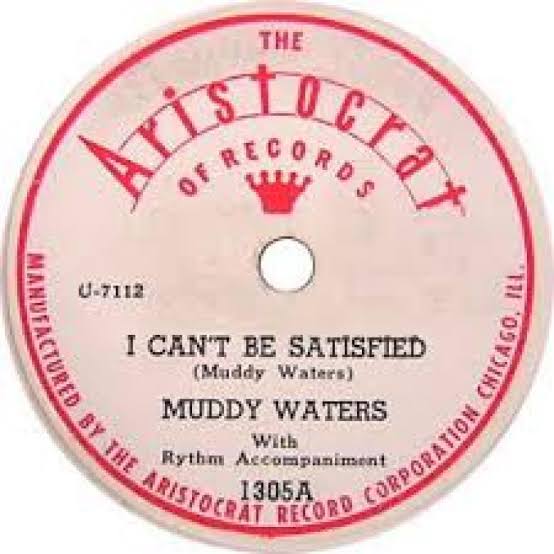
The song was recorded in April 1948 (some sources list late 1947/early 1948 sessions leading into the April date) at Universal Recording in Chicago for Aristocrat Records, the precursor to Chess Records. It was released in June 1948 as Aristocrat 1305, backed with “I Feel Like Going Home.” Both sides were credited to “Muddy Waters with Rythm [sic] Accompaniment.”
Leonard Chess produced the session (with involvement from partner Evelyn Aron, who strongly supported Muddy’s raw style when Leonard was initially skeptical). The single became a local hit, selling out quickly on Chicago’s South Side and reaching No. 11 on the Billboard Most-Played Jukebox Race Records chart. It was later reissued on Chess and has appeared on countless Muddy Waters compilations.
Muddy had first recorded a closely related song, “I Be’s Troubled,” in August 1941 for Alan Lomax’s Library of Congress field recordings on Stovall Plantation in Mississippi. The 1948 version updated that material for the urban market while retaining its Delta roots.
Musicians
- Muddy Waters (McKinley Morganfield): vocals and electric guitar (bottleneck/slide)
- Ernest “Big” Crawford: string bass (upright bass)
This was a deliberately sparse, almost solo performance. Muddy’s amplified guitar and voice are the centerpiece, with Crawford’s slap bass providing rhythmic support. There are no drums, piano, or harmonica—keeping the sound close to Delta blues while introducing the electric guitar that would define Chicago blues.
Songwriters
Muddy Waters (credited as McKinley Morganfield or Muddy Waters) is the songwriter. The song is a reworking and expansion of his earlier “I Be’s Troubled” from the 1941 Lomax sessions. Muddy drew heavily on traditional Delta blues phrasing, floating verses, and personal experience, stitching together lines and images common in older blues songs while shaping them into a personal statement of restlessness and dissatisfaction.
The lyrics do not tell a single linear story. Instead, they string together classic blues themes of heartache, jealousy, violence, and the desire to leave:
- Feeling troubled and worried all the time
- The lover who has done him wrong
- Fantasies of violence (“I feel like snapping a pistol in your face… I’m going to let some graveyard be your resting place”)
- The decision to go away and never return
Bob Margolin (Muddy’s longtime guitarist) later noted that the lyrics feel like phrases from older songs “pasted together,” with verses that don’t always stay on the same subject. Yet this very quality gives the song its power—it feels like a living piece of oral tradition filtered through Muddy’s voice and experience.
Muddy’s songwriting here is still rooted in the Delta tradition of Son House, Robert Johnson, and Charley Patton, but the electric guitar and urban setting transform it. He was not yet relying on professional songwriters like Willie Dixon (who would later supply many of his biggest hits). “I Can’t Be Satisfied” is pure early Muddy—raw, autobiographical in feel, and shaped by the folk-blues process of adaptation and reinvention.
Musical Style and Analysis
“I Can’t Be Satisfied” is a mid-tempo twelve-bar blues lasting roughly 2:40–2:45. It is a transitional masterpiece: still recognizably Delta blues in structure, phrasing, and emotional tone, yet already pointing toward the amplified Chicago sound that Muddy would perfect in the 1950s.
Muddy plays electric guitar with a bottleneck (slide), producing the crying, vocal-like tones that became his trademark. His playing is rhythmic and driving rather than purely melodic; the guitar functions almost as a second voice, answering and reinforcing the vocal lines. The tone is raw and slightly overdriven for the era, cutting through the sparse arrangement. Big Crawford’s upright bass provides a walking, slap-style pulse that keeps the song grounded without cluttering it.
The vocal performance is intense and conversational. Muddy’s voice is rich, slightly nasal, and full of blue notes and microtonal bends. He sings with a sense of controlled urgency—restless rather than purely angry. The phrasing is flexible; he often stretches or compresses lines to fit the emotional weight of the words, a hallmark of the best Delta singers adapted to a more urban rhythmic feel.
Harmonically the song stays close to traditional blues structure, but Muddy’s approach to tonal space is “laddered” rather than fully networked—favoring strong root, third, and fifth relationships with characteristic blue-note flattening. The result feels both ancient and new. The absence of drums and piano keeps the focus tightly on the interplay between voice, slide guitar, and bass, creating an intimate yet powerful sound that stood out against the more polished jump blues and R&B of the late 1940s.
Lyrically, the song captures a deep sense of dissatisfaction that goes beyond a single romantic grievance. The repeated declaration “I can’t be satisfied” becomes a broader statement of existential restlessness—the feeling that nothing (and no one) can settle the singer’s mind. This theme of perpetual dissatisfaction would later echo in rock music, most famously in the Rolling Stones’ “(I Can’t Get No) Satisfaction,” which drew partial inspiration from the title and mood of Muddy’s song.
Suggested Listening
 Buy from Amazon Essential Blue Archive: I Can't Be Satisfied by Muddy Waters
Other Versions and Covers
Muddy re-recorded the song several times, most notably on the 1977 album Hard Again (produced by Johnny Winter), where it appears in a fuller band setting with Winter recreating Muddy’s original slide parts on National steel. Other notable covers and versions include:
- The Rolling Stones (recorded at Chess Studios in 1964/1965, released on various compilations and live albums)
- Rory Gallagher
- Buddy Guy
- John Hammond Jr.
- Gregg Allman
- Joe Bonamassa
- Various traditional and revival blues artists
The song has remained a staple of acoustic and electric blues repertoires and is frequently performed as a showcase for slide guitar.
Legacy
“I Can’t Be Satisfied” is a cornerstone of postwar blues history. It was Muddy Waters’ first major hit, proved that electrified Delta blues could sell, and helped convince Leonard Chess of the commercial potential of the raw Southern style. The record’s success paved the way for Muddy’s subsequent classics and for the entire Chess blues roster.
It stands as a bridge between the acoustic country blues of the Mississippi Delta and the amplified, urban Chicago blues that would dominate the 1950s and influence rock & roll. The song’s restless spirit, innovative use of electric slide guitar, and unpolished intensity made it a touchstone for later generations of blues and rock musicians. Alongside tracks such as “Rollin’ Stone” and “Hoochie Coochie Man,” it remains essential Muddy Waters and a defining document of the moment when the blues went electric and moved north.