Blue Goose Records was a small but influential American independent label dedicated to new recordings of blues and related roots music. Founded in 1970 in New York City by Nick Perls (the same collector and audio engineer who established Yazoo Records a couple of years earlier), it served as a living counterpart to Yazoo’s archival reissues of 1920s and 1930s 78s. While Yazoo preserved rare pre-war sides by artists such as Charley Patton, Blind Lemon Jefferson, and Blind Blake, Blue Goose focused on contemporary performances by both rediscovered older Black bluesmen and younger players interpreting traditional styles.
History and Ownership
Nick Perls (1942–1987), a dedicated blues enthusiast and skilled engineer, operated Blue Goose largely as a one-man or very small operation out of his West Village apartment in New York. He recorded many of the sessions himself, often in informal living-room settings, prioritizing acoustic authenticity and the raw spirit of pre-war blues over commercial polish. The label released roughly two dozen LPs between 1970 and 1980 (its final release was Roy Smeck’s Wizard of the Strings in 1980).
Perls handled much of the production, photography, and business himself, with occasional help and liner notes frequently written by collaborator Stephen Calt. After Perls’s death in 1987, the Blue Goose catalog (along with Yazoo) was acquired by Shanachie Records Corp. in the late 1980s. Many titles were later reissued on CD by Japan’s Air Mail Recordings around 2002, helping keep the music available to collectors.
The label’s approach reflected the 1960s–70s blues revival’s dual interest in rediscovering surviving pre-war artists and nurturing a new generation of players who studied the old masters closely.
Focus on Blues and Notable Artists & Recordings
Blue Goose specialized in acoustic and traditional blues, with a mix of Delta, country, and ragtime-influenced styles. Its catalog mixed important late-career documents of older musicians with strong work by younger interpreters.
Son House, one of the towering figures of Delta blues and a major influence on Robert Johnson and Muddy Waters, is represented by The Real Delta Blues (1974 or 1975). The album draws on private 1960s tapes recorded by Perls, capturing House’s intense slide guitar, powerful voice, and spiritually charged performances on tracks such as “Pony Blues,” “Milkcow’s Calf Blues,” and “Motherless Children.” It remains a valued document of the rediscovered House in a relatively intimate setting.
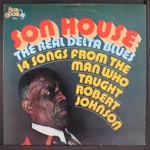 Buy from Amazon The Real Delta Blues
Sam Chatmon, a founding member of the Mississippi Sheiks and one of the last links to the pre-war string-band and country-blues tradition, recorded The Mississippi Sheik (1972). The album presents his ragtime-inflected guitar, humor, and repertoire rooted in Bolton, Mississippi, including material that evokes the Sheiks’ classic sound while standing as a strong solo statement.
Larry Johnson, the East Coast blues guitarist and singer associated with the Reverend Gary Davis circle, released Fast & Funky (1971, catalog BG-2001). The album showcases his crisp fingerpicking, strong vocals, and a mix of traditional and original material, helping establish him as one of the stronger younger Black blues players of the era.
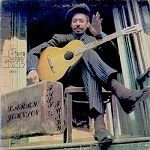 Buy from Amazon Fast and Funky
Yank Rachell, the pioneering blues mandolinist who had worked with Sleepy John Estes and others in the 1930s, cut a self-titled album (1973). It highlights his distinctive mandolin work and vocals on both older styles and later material, preserving an instrument rarely featured so prominently in post-war blues recordings.
Shirley Griffith, the Indiana-based bluesman known for his clean guitar style and connection to the Indianapolis scene, recorded Mississippi Blues (1973). The album continued the strong impression he had made on earlier Bluesville releases and offered further evidence of his polished traditional playing.
Bill Williams, a Kentucky bluesman and one of the few living musicians who had worked with Blind Blake in the 1920s, released Low and Lonesome (around 1970) and The Late Bill Williams: Blues, Rags and Ballads (1974). These records document a highly skilled player whose repertoire spanned blues, ragtime, and related styles, with notes often emphasizing his historical connection to Blake.
Thomas Shaw (sometimes listed as Tom Shaw) contributed Blind Lemon’s Buddy (1972), reflecting his association with Blind Lemon Jefferson and Texas blues traditions.
Younger white artists who studied and performed traditional blues also featured prominently. Rory Block released I’m in Love (1976), an early statement of her deep engagement with country blues guitar and vocals. Jo Ann Kelly, the British blues singer and guitarist, recorded an album (1972) that included contributions from John Fahey, Woody Mann, and others, showcasing her powerful voice and commitment to classic blues forms. Roy Book Binder (often with Fats Kaplin) issued albums such as Git-Fiddle Shuffle (1975) and Ragtime Millionaire (1977), blending Piedmont and ragtime influences. Other contributors included Graham Hine (Bottleneck Blues, 1970), Roger Hubbard, Woody Mann, John Miller, and Steve Mann.
A distinctive and popular side of the catalog came from R. Crumb & His Cheap Suit Serenaders. The cartoonist and record collector Robert Crumb and his friends recorded several albums (starting with the self-titled 1974 release, followed by Number Two, No. 3, and a party record in the mid-to-late 1970s). These playful yet knowledgeable takes on old-time jazz, blues, and novelty tunes brought a humorous, collector’s sensibility that appealed to fans of both the music and Crumb’s visual work.
The label also released ragtime and related material (e.g., Dave Jasen’s Fingerbustin’ Ragtime) and a sampler (Blue Goose Sampler), along with the occasional non-blues roots project.
Legacy
Blue Goose Records never achieved large commercial scale; it remained a specialized, collector-oriented imprint. Its importance lies in the high-quality documentation of rediscovered pre-war blues survivors (Son House, Sam Chatmon, Yank Rachell, Bill Williams, Shirley Griffith, and others) at a time when many of these artists were still active but under-recorded, and in providing early platforms for younger traditionalists such as Larry Johnson, Rory Block, and Jo Ann Kelly. The intimate, often living-room recordings and Stephen Calt’s informed notes further enhanced the catalog’s value for serious blues listeners.
Through later reissues by Air Mail Recordings and the integration into Shanachie’s holdings, the Blue Goose catalog continues to serve as a valuable resource for acoustic and traditional blues. In the broader landscape of 1970s independent blues labels, it stands as a focused, personal effort that complemented the archival work of Yazoo and helped keep living connections to the pre-war tradition audible.